
Developing Local Government Policy for Land Use Planning
Local government policy language linked to mapping layers on Biodiversity Atlas
The Action for Adaptation project team undertook conversations with local government and First Nations Planners in 2021 and 2022. The planners stated that while the importance of environmental values is generally recognized, concepts like biodiversity protection and nature-based solutions are not always well understood, and often apply differently to different staff roles. Planners asked for policy text that was written in language that different types of planners can use—from long-range policy planners to those who are responsible for land use decisions and development proposals.
This section provides examples of effective environmental policy provisions that are currently in use by local governments in the project area, as well as recommended provisions drawn from key resources.
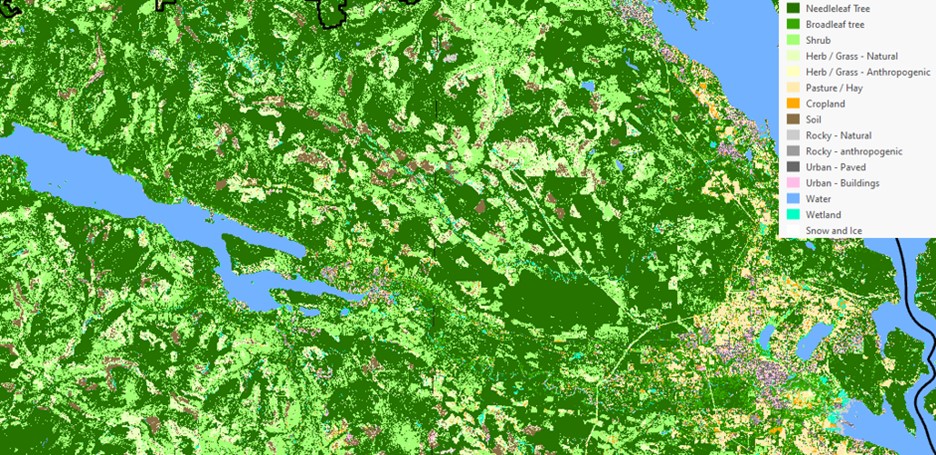
Regional Growth Strategies (RGS)
Regional Growth Strategies (RGS) are enabled under the Local Government Act (LGA) Part 13. An RGS is a voluntary, consensus-based regional land use planning policy document coordinated by a regional district for its member municipalities. An RGS should address regional environmental goals with a 20-year timeline. All regional district bylaws and plans, and all OCPs of member local governments must be consistent with the RGS.
A well-crafted RGS can drive the protection and development of ecological networks across jurisdictional and ownership boundaries by designating biodiversity corridors. Objectives and policies for ecosystem protection should be stated. This helps raise the profile of regional ecological values and explain links between sensitive ecosystems and biodiversity to programs such as waste management, water conservation and responses to climate change. An RGS should recommend that protection of these ecosystems be incorporated into municipal OCPs, green infrastructure planning, watershed planning, biodiversity conservation strategies, environmental management systems and corporate strategic and operational documents.
An RGS may also identify land acquisition priorities and may itself include a regional biodiversity conservation plan (see section 4.8). Almost all RGSs in the province contain urban growth boundaries and policies to direct new development into serviced or near urban areas, with the aim of leaving rural and natural landscapes less disturbed. An RGS can also enhance the effectiveness of stewardship initiatives and facilitate collaborative financing.
RGS policy provisions
To support biodiversity and protect connectivity, an RGS should at a minimum contain policies that:
- clearly define “urban” and “rural” in terms of lot size and density;
- contain urban areas, and direct development and density into already serviced areas;
- protect rural landscapes from fragmentation;
- include maps designating land into classes or categories, including sensitive ecosystems, regional greenway or biodiversity corridors, unprotected green space, and priority parkland acquisitions;
- cluster development away from ESAs and SAR; and
- enable development of a regional biodiversity conservation strategy.[1]
- Incorporate nature-based solutions to protect communities from natural hazards such as drought, flood, storms and heat domes.
Table 6: Examples of Policy Text drawn from Existing Regional Growth Strategies
In most cases, these are policies that member municipalities have adopted in their bylaws.
Theme | Policy statement | Adapted from | Indicators |
Multi-theme | Conserve and enhance biodiversity and ecological services by protecting ecologically important features and corridors, including floodplains, shorelines, intertidal areas, stream systems, aquifers, and urban forests. | City of Nanaimo Shaping Our Future 2040 (2024), policy 2.8, pg 29 | Area of natural forest, floodplain, riparian buffers, intertidal areas, aquifers – tracked over time. |
Land cover and land use | Encourage land use, infrastructure, and human settlement patterns that reduce fossil fuel and the associated emissions, create carbon storage opportunities, and improve ecological connectivity. | City of Nanaimo Shaping Our Future 2040 (2024) , policy 1.2, pg 25 | Tonnes of carbon stored in intact ecosystems. Tonnes of carbon stored in the urban forest canopy. Total hectares of connected and intact habitat. |
Environmentally sensitive areas | 1. Work with the federal and provincial governments to identify and protect natural areas that are representative of the region’s ecosystem and form systems of interconnected areas and natural corridors capable of sustaining native plant and animal communities. | City of Nanaimo Shaping Our Future 2040 (2024), policy 2.6, pg 29 | The area of land protected in the CRD as Regional Park (Capital Regional District Regional Growth Strategy Indicators Report 2023 , Summary). Change in area and quality of ESA. |
2. Work with property owners, businesses, the provincial government, and First Nation communities to improve, support, and increase awareness of the essential services that forests provide in the region such as: · ecological diversity and a healthy natural environment · natural stormwater management, erosion reduction, water filtration · carbon dioxide storage · air temperature moderation in urban areas · spiritual and cultural enrichment | City of Nanaimo Shaping Our Future 2040 (2024), policy 1.12, pg 27 | ||
3. Use a sensitive ecosystems atlas as a common method of collecting and displaying conservation and environmental information. | Comox Valley Regional District Regional Growth Strategy, obj 2-A3, pg 35 | ||
4. Encourage local governments to either individually or jointly regularly update environmental mapping that depicts critical information such as sensitive ecosystems, watercourses and riparian areas, parks and greenways. | Comox Valley Regional District Regional Growth Strategy, obj 2-A2, pg 35 | ||
5. Prepare a complete bio-inventory of regionally significant ESAs, SAR, and the natural biodiversity of the region. | City of Nanaimo Shaping Our Future 2040 (2024), policy 2.11, pg 29 | ||
Hydrologically sensitive | Undertake watershed-based planning, integrated with the protection of ESAs, including wildlife corridors. | City of Nanaimo Shaping Our Future 2040 (2024), policy 2.1, pg 28; Capital Regional District, Regional Growth Strategy Indicators Report 2023, 2.1(d), pg 11 | Length of stream with canopy cover and or naturalised embankments. Length of stream that is compliant with provincial legislation setbacks. |
Ecosystem connectivity | 1. Ensure OCPs adopt clear definitions and guidelines for ecological greenways and work with neighbouring local governments to create region-wide linkages. | Comox Valley Regional District Regional Growth Strategy , obj 2-B2, pg 37 | Percentage of green infrastructure network in public ownership (City of Surrey, pg 304) |
2. Work with member local governments to establish or strengthen policies within OCPs that ensure the long-term protection of ecological connectivity hubs and corridors depicted on [maps], including policies aimed at connecting these lands and buffering them from activities in adjacent urban areas. | Curran et al, 2021, Green Bylaws Toolkit, s. 17.1, pg 189 | ||
Nature-based solutions to climate change | 1. Maximize co-benefits by coordinating land use planning and future infrastructure investment efforts (including natural assets) to reduce the risk of climate change impacts (wildfires, extreme weather events, flooding, coastal storm surge, erosion, sea level rise, etc.). | City of Nanaimo Shaping Our Future 2040 (2024), policy 1.9, pg 26 | |
General | 1. Encourage local governments to work together and with First Nations and other organizations to adopt consistent actions and policies for environmental and natural asset protection, through OCPs, zoning (protection or EDPAs), restoration, ecological connectivity, watershed health and other mechanisms, that promote the principles of precaution, connectivity and restoration. | Comox Valley Regional District Regional Growth Strategy, obj 2-B1, pg 37 | |
2. Consider the impacts on ecological structure and function of land use decisions and require an environmental review for projects with the potential to negatively affect ESAs, the coastal zone, or environmental quality. | City of Nanaimo Shaping Our Future 2040 (2024), policy 2.13, pg 29 |
[1] Garry Oak Ecosystems Recovery Team. 2014. Model Bylaws for the Protection of Garry Oak and Associated Ecosystems. Victoria, B.C. 187 pp. Available at https://goert.ca/wp/wp-content/uploads/GOERT-Model-Bylaws-2014.pdf
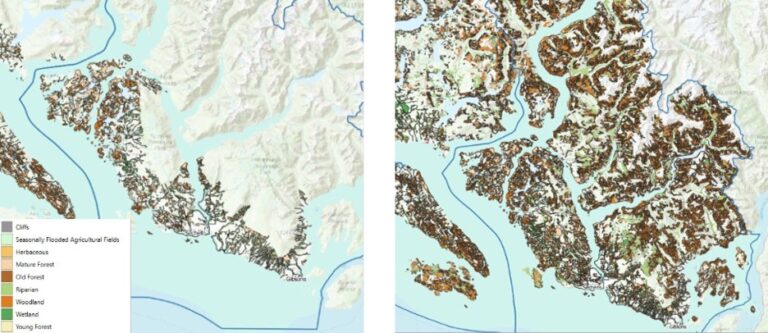
Official Community Plans (OCPs)
Official Community Plans (OCPs) are enabled under the Local Government Act sections 471-475, and 477-478 and are adopted as a local government bylaw. An OCP is a statement of goals, objectives, and policies intended to guide local government decisions on planning and land use management within the area covered by the plan.
LGA s.473 (1)(d) states that an OCP must include statements and map designations for the area covered by the plan with respect to restrictions on the use of land that is subject to hazardous conditions or that is environmentally sensitive to development. LGA s.488(1)(a) states that an OCP may designate development permit areas for protection of the natural environment, its ecosystems and biological diversity. With this authority, local governments may, for example, set EDPA guidelines for protecting ecosystems.
OCP policy provisions
Table 8 provides examples of OCP policy text drawn either from existing OCPs or from legally vetted publications (e.g., Green Bylaws Toolkit).
Table 8. OCP policy provisions, sources, targets, and indicators (download pdf)
Theme | Policy statement | Adapted from | Target / Indicator |
Leadership / Multi-theme | Integrate public trees, forests, and green infrastructure into asset management planning, including budgeting, policy development, and staff resourcing. | City of Courtenay OCP , NE23 pg 127 | |
When conducting comprehensive OCP reviews, ensure that the most currently available information regarding canopy cover, sensitive ecosystem inventories, connectivity analysis and invasive species inventories are included to inform long range land use decisions and Development Permit guidelines. | City of Courtenay Urban Forest Strategy 2019 – 2050 , pg 83. | ||
First Nations | Commit to incorporating Indigenous perspectives into land use decision processes. Seek guidance from Indigenous partners in how to make this commitment a reality. | City of Courtenay OCP, pg 20 | |
Work with local First Nations to consider protections for culturally important featuresand identify current habitat linkages and how to re-establish missing linkages. | |||
Work with local First Nations to develop effective conservation strategies. | |||
Explore Indigenous Protected and Conserved Areas, Land Codes, and other land stewardship approaches as opportunities to collaborate with First Nations. | |||
Work with First Nations to consider culturally important features and identify current habitat linkages and how to re-establish missing linkages. | |||
Land cover and land use | Use land cover monitoring to identify different ecosystem types (e.g., forest, riparian) and aim for no net loss of native vegetation post-development. | Curran et al, 2021, Green Bylaws Toolkit, s. 4.6.6, pg. 39 | Track area impacted by development and logging. (Cowichan Valley Regional DistrictIndicators Dashboard, pg 13) Track type and proportion of natural areas (City of Surrey Biodiversity Conservation Strategy, pg 93) |
Use land cover change monitoring to identify retention or connectivity targets, e.g., no net loss or net gain of certain land cover types (ESA, riparian, forest, etc.). | |||
Environmentally sensitive areas | An ecosystem-based approach to planning and management will be used to preserve ecological health and the ongoing function of ecological processes. | City of Courtenay OCP, NE2 pg. 123. | Target goal of 40% canopy coverage for the entire city (SurreyOCP , pg 149) or Achieve 40% tree canopy cover within the Urban Containment Boundary (Metro Vancouver Climate 2050 Nature and Ecosystems Roadmap , pg 35) or Every neighbourhood has at least a 30% canopy coverage (City of Nanaimo Monitoring Strategy 2024, pg 19) Protect 50% of the region for nature (Metro Vancouver Climate 20250 Nature and Ecosystems Roadmap, pg 35) Track the type of ESAs in each electoral area (Cowichan Valley Regional District Indicator Dashboard pg 14) Area of CVRD protected as park. (Cowichan Valley Regional District, Indicator Dashboard pg 15) Track the change in area or % cover of each Environmentally Sensitive Area type across the region. (Cowichan Valley Regional District, Indicator Dashboard, pg 18) |
Preserve sensitive ecosystem areas, their living resources, and connections between them in a natural condition and maintain these areas free of development and human activity to the maximum extent possible. | Curran et al, Green Bylaws Toolkit , 18(3)(b)(1) pg 194. | ||
Protect and expand the existing urban forest / tree canopy through implementation of an Urban Forest Strategy, ensuring that planted tree species are appropriate for forecast climate conditions and that large native trees are preserved. | City of Courtenay OCP, NE24 pg 127. | ||
Sensitive ecosystems and the connections between them will be preserved in a natural condition | City of Courtenay OCP, NE1 pg 123 | ||
Collaborate with landowners, other levels of government, non-governmental organizations, and neighbouring jurisdictions in developing regionally consistent approaches to conserving, and restoring environmentally sensitive areas, watershed health and species at risk, using the principles of precaution, connectivity, and restoration. | City of Courtenay OCP NE 4 pg 123. | ||
Develop management plans for all natural area parks that focus on protecting or enhancing ecological integrity of ecosystems, ESAs, and connectivity corridors. | District of Saanich OCP , pg 40. | ||
Adopt Park Plans that include strategies and policies to protect and conserve the natural environment. | City of Nanaimo Shaping Our Future 2040 (2024), policy 2.14, pg 29 | ||
Work in collaboration with property owners, developers, businesses, and appropriate provincial and federal agencies to restore damaged ecosystems and utilize mapping to identify highest priority areas. | City of Nanaimo Shaping Our Future 2040 (2024) , policy 2.1, pg 29 | ||
While the municipality supports creation of new housing supply as detailed in the OCP, it also values its natural assets and aims to ensure the long-term protection of environmentally sensitive areas [e.g., through zoning and EDPAs]. | City of Colwood, Bylaw 1700-10 OCP Amendment (Env. DPA)- Engagement Update and Response, Appendix 7, pg 16. | ||
ESA data and mapping | |||
Regularly update ecosystem data (e.g., terrestrial, aquatic, marine, invasive species, and species at risk) as new information becomes available and make it available on a public GIS portal. Continue to refine the precision of terrestrial ecosystem polygon boundaries through ground-truthing and high-resolution ortho-imagery. | District of Saanich Biodiversity Conservation Strategy, pg. 8. | ||
Collaborate with landowners, other levels of government, non-governmental organizations, and neighbouring jurisdictions to develop regionally consistent approaches to inventorying and mapping ESAs and species at risk. | City of Courtenay OCP , NE 4 pg 123; Curran et al, 2021, Green Bylaws Toolkit, s.18.3, pg. 195. | ||
Maps that show ESAs, land cover including different ecosystem types, connectivity corridors, EDPAs, and species at risk critical habitat are integral to the OCP. | |||
Current and (where possible) dynamic mapped data will be used to inform land use planning and land use decisions to augment the static maps within the OCP. | |||
Map and inventory baseline ecological conditions before deciding what to change, to inform long-term planning, establish and fund a land cover and land cover change monitoring program that targets natural areas and features. | |||
Hydrologically sensitive (including marine) | Conserve wetlands to sustain their water storage, ecological, carbon and socioeconomic functions. | 100% of water samples at selected monitoring sites within the city meet BC Water Quality Guidelines. (City of Nanaimo Monitoring Strategy 2024, pg 20). Length of stream with canopy cover or naturalized embankments. Length of stream that is compliant with provincial legislation setbacks. | |
Establish a requirement within the EDPA guidelines for a 30-metre setback from the stream boundary when conducting development on properties subject to the Riparian Areas Protection Regulations (RAPR), whenever opportunities for a 30-metre setback are possible. | City of Courtenay OCP , NE29 pg. 128. | ||
Conduct analyses to predetermine setbacks on streams subject to the RAPR for areas where a 30-metre setback cannot be achieved. | City of Courtenay OCP , NE30 pg. 128. | ||
Ensure that development does not negatively impact watercourse or wetland environments or, where such impacts are unavoidable due to the existing configuration of parcels of land in relation to watercourses or wetlands, to ensure that development does not result in a net loss of productive fish habitat. | District of West Vancouver policy NE13, OCP Schedule ii, pg 104 | ||
Favour nature-based solutions & green infrastructure options (e.g., rain gardens, vegetated swales) when planning for grey infrastructure replacement, such as dams and other water management features. | |||
No loss of quantity, quality, and function of wetlands. Monitor water quality and prevent pollution. | Curran et al, 2021, Green Bylaws Toolkit, s. 20.6, pg. 236 and others. | ||
Identify, map, and classify all the wetlands and wet forest. | |||
Marine | |||
Develop a shoreline policy to conserve remaining natural shorelines, and restore armored shorelines with green shores approaches to the maximum extent possible. | City of Courtenay OCP , NE10 pg. 125. | Increase the length / area of naturalised shoreline (District of Sechelt Integrated Community Sustainability Plan Goals and Actions, S 3.0) – Pacific Salmon Foundation Shore line mapping project. | |
Ecosystem Connectivity | Cross-jurisdictional ecosystem connectivitycorridors will be established to preserve and restore long-term connectivity between sensitive ecosystems. | City of Courtenay OCP , NE3 pg. 123. | Percentage of green infrastructure network in public ownership (City of Surrey OCP, pg. 304) |
ESAs, riparian areas, and natural areas will be linked, using green corridors where appropriate, and designed to maintain biodiversity. | Saanich OCP , 6.1.5 pg. 40. | ||
Ecosystem connectivity will be protected through EDPAs and conservation covenants, and by coordination and collaboration among jurisdictions. | |||
Where appropriate, install wildlife over- or under-passes to maintain connectivity corridors and reduce wildlife-vehicle collisions. | City of Surrey – Biodiversity Design Guidelines – Road Ecology | ||
Ensure connectivity of properties and landscapes to support ecosystem processes. This includes incorporating considerations such as wildlife movement and historical hydrological patterns into the development proposal including transportation and utility corridors. | City of Courtenay OCP , NE26 pg 127 | ||
Evaluate and bring together existing policies, plans, and programs, and conduct additional research as necessary, to inform a Biodiversity and Green Infrastructure Network Strategy. | City of Courtenay OCP , NE9 pg 124 | ||
Species at Risk | Where possible, preserve areas (including buffers) that contain plants and animal habitat that aredesignated under SARA Schedule 1 and are red listed (endangered) or blue listed (vulnerable) by the BC Conservation Data Centre. | District of Saanich Development Permit Area Guidelines ,3.6.1(c) | |
Establish a schedule for monitoring and updating the OCP maps when new ESA or SAR information becomes available. | |||
| Control of Invasive Species | ||
Develop an invasive species management bylawthat requires immediate removal of listed invasive species that have been newly introduced, imminently threaten critical habitat for species at risk, or threaten human health. | GOERT Model Bylaws , s. 15.2 pg. 138 | ||
Work in partnership to minimize the further introduction and spread of invasive species, and develop an invasive species management plan to prevent, eradicate, contain, and control the spread of invasive species in [community] and the wider region. | City of Courtenay OCP , NE8 pg 124 | ||
Fund and commit to a volunteer-based invasive species management program that has professional oversight. | |||
Establish an invasive species bylaw that identifies priority species and requires removal of those species from private properties. | District of Saanich Development Permit Area Guidelines , 3.6.1(d) | ||
Nature-based Solutions to climate change | Double the rate of tree planting to enhance urban forest for increased carbon sequestration and other ecosystem services while ensuring climate-appropriate tree species are selected. | 45% reduction in greenhouse gas emissions by 2030, and establish the foundation for the 30-year goal of a carbon neutral region by 2050 (Metro Vancouver Climate 2050 Nature and Ecosystems Roadmap, pg 16) Track changes to forest carbon stores as a result of harvesting and development (Action for Adaptation Forest Carbon and Land Cover Mapping) | |
Continue annual planting targets of ### new trees on public land and work towards ### new trees on private land until [year] | City of Courtenay OCP , NE21 pg 127 | ||
Protect and enhance the carbon sequestration value of natural systems by enhancing the urban forest and protecting local soil. | |||
Consider levying a land acquisition tax specially targeted at sequestering carbon, particularly wetlands and forests. This also serves to protect sensitive ecosystems, habitat for species at risk and of cultural value, and connectivity. | |||
General | Protect natural areas by maintaining the Urban Containment Boundary (UCB) and encouraging compact urban development inside the UCB. | Saanich OCP, 6.1.3 pg. 40. | Percentage of residential growth occurring within the Urban Containment Boundary (Metro Vancouver, Metro Vancouver 2024 – 2028 Financial Plan – Regional Planning, pg. 390). |
Environmental Development Permit (EDPA) | |||
Protect areas of high environmental sensitivity by not permitting development on these sites, or through development control and the securing of these areas in public ownership where appropriate. | Port Coquitlam OCP, s. 7.4, pg. 37. | ||
Any property within 50 m of a stream or that contains an ESA may require an EDP. No site clearing, regrading or other land disturbance is permitted until an EDP is issued. Several different types of reports and plans may be required as part of the EDP application. Information on each of these reports/plans can be found at [insert links as appropriate]. | City of Abbotsford Natural Environment Development Permit policy | ||
Require developments adjacent to ESAs, including ecosystem connectivity opportunity areas, be subject to EDPA guidelines | City of Courtenay OCP , NE28 pg 128 | ||
Utilize Streamside Development Permit Areas for ecosystem corridor connection opportunities. | |||
Prior to any development work on lands that contain an EDPA, including site preparation, an EIA shall be prepared by a QEP and have input from other professionals of specific expertise where required. | |||
Dedicating very small parcels as park to satisfy DPA requirements will be avoided unless contiguous with or within 50 m of existing natural area parks and unless they will be maintained free from invasive species. | |||
Develop detailed terms of reference with standards to direct consistent performance by QEPs to safeguard sensitive ecosystems from adverse effects. | |||
EDPA – Environmental Impact Assessment | |||
Require all development proposals on properties equal to or greater than 4,000 metres square in size to submit an Environmental Impact Assessment (EIA) to determine the presence or absence of Environmentally Sensitive Areas | City of Courtenay OCP , NE27 pg. 127. | ||
Site assessments or EIAs will be assessed by staff having appropriate ecological expertise (e.g., environmental planner). | |||
Where it is determined that an EIA is required, establish clear terms of reference to direct how the EIA is to be carried out. | |||
Consider requiring an EIA for all properties showing an ESA or any property >1 ha, even if previously disturbed. | |||
All development proposals that involve a change in zoning, subdivision, or amendment to a plan must undergo an environmental impact assessment process before development approvals are granted. Development design must reflect the objectives and guidelines of best management practices. | Curran et al, Green Bylaws Toolkit, 18(3)(b)(1) pg. 194. | ||
Site assessments shall require consideration of cumulative effects, such as habitat fragmentation, as well as off-site impacts, such as increased risk of flooding or sedimentation downstream. | SFU ACT, Regulatory Mechanisms Toolkit, s. 2.1.1 pg. 9. | ||
Bylaws | |||
Adopt or update a Tree Protection Bylaw to strengthen tree cover protection. | Target goal of 40% canopy coverage for the entire city (Surreypg 149) or Achieve 40% tree canopy cover within the Urban Containment Boundary (Metro Vancouver pg 35) or Every neighbourhood has at least a 30% canopy coverage (City of Nanaimo pg 19) | ||
Enact Zoning Bylaw requirements to avoid impact to ESAs, including but not limited to: a. Cluster housing zones to allow for a tighter grouping of homes on the most buildable portions of the property in exchange for retaining larger portions of the land in a natural state, and allowing the owner(s) of land containing ESAs to use the original site area in computing density allowances, in accordance with the Zoning Bylaw; b. Density bonusing in exchange for increased nature protection or restoration; and c. Limiting the extent of impervious surfaces. | City of Courtenay OCP , NE25 pg 127 | ||
Monitoring, compliance and enforcement | |||
Monitor compliance and other legal requirements such as covenants related to protecting sensitive ecosystems. | City of Courtenay OCP , NE7 pg. 124. | Produce a State of the Environment report every five years. | |
Commit resources for effectiveness monitoringof replacement lands or restoration of lands. | |||
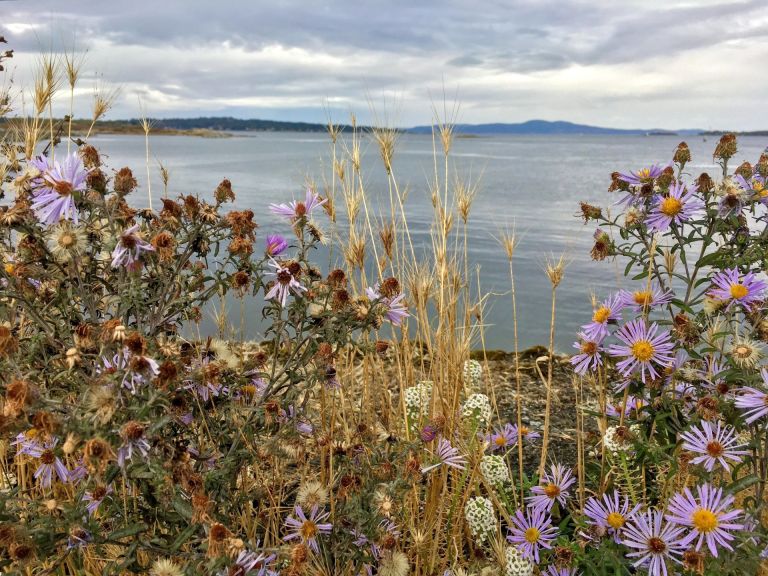
Biodiversity Strategies
Local government environmental strategies may be specific to such issues as biodiversity, climate adaptation, land and parks acquisition, urban forests, and natural asset and watershed management. They may vary greatly to reflect each community’s conditions, goals, and capacity, but ideally they will provide a policy framework of priorities, goals, objectives, and indicators and targets for measuring performance. An action plan should also be included so that departments can plan and budget.
Environmental strategies should work in conjunction with and reflect the community’s OCP, as well as other strategies, plans, and implementation tools such as bylaws. If there are gaps to achieving biodiversity protection and climate resilience, a strategy should provide recommendations for how these may be filled. Finally, environmental strategies should include current maps showing biodiversity hotspots and ESAs if these are not included in the OCP.
With current climate change projections, warmer and drier summers are expected to reduce moisture available to trees during the growing season. Windstorms, pests and diseases, drought and wildfire already affect the region’s natural and urban forest, and in the future, the variability, frequency and intensity of disturbance events will increase. By planning for these conditions in biodiversity, urban forest, and climate strategies, local governments will be better positioned for climate resilience and healthier communities.
Appendix C – Example actions/policies for local government biodiversity strategies
Theme | Strategy statement | Adapted from | Indicator / target |
General / multi-theme | Base decisions on sound science while incorporating local knowledge and expertise. |
| |
Manage biodiversity at a city-wide scale and engage neighbouring jurisdictions to build on existing networks of natural areas and biodiversity hotspots.
|
| ||
Develop an inventory of natural assets and develop a Natural Asset Management Plan (see section 4.10.2). | District of Saanich Biodiversity Conservation Strategy, 3.1, pg 51 | Inventory completed by [date] | |
Make restoring ecological function a priority over rigid interpretations of naturalness. Favour planting native species but consider appropriate non-native species to enhance biodiversity in urban areas. | Biodiversity consists of >75% native species | ||
Encourage “urban ecosystems” such as green roofs, rain gardens, and wildlflower meadows that have a mix of native and non-native species to enhance urban biodiversity and provide people with access to nature. |
| ||
Incorporate climate projections such as increased summer drought, rising sea level, and more intense rainfall and storm events into all biodiversity projects such as tree planting and wetland restoration. |
| ||
Improve development review and permitting processes, including the tree protection bylaw and other green policies to better protect and enhance biodiversity during development. | City of Vancouver Biodiversity Strategy, action 21, pg 37 | Policies are vetted by a QEP or similarly experienced staff. Policies are integrated across all departments. | |
Consider incentives to restore degraded habitat during re-development. | City of Surrey’s Biodiversity Conservation Strategy , A-2.8 pg 84 | Incentives are established and promoted. ## of hectares of habitat restored in [timeframe] | |
Allocate resources to identify and deal with encroachments into [jurisdiction] owned natural lands, including naturalized right of ways and mandate their restoration. | District of Saanich Biodiversity Conservation Strategy, 3.2, pg 51 | Resources are allocated. ## of hectares of natural lands by [timeframe] | |
Implement an environmental development permit area or for the protection of the natural environment and ensure guidelines are clear and well-communicated. | District of Saanich Biodiversity Conservation Strategy, 3.12, pg 53 |
| |
Monitor and measure performance and adapt actions accordingly. This requires establishing appropriate indicators and measuring against targets. Draw on ecological expertise to identify appropriate indicators and targets. | The status of biodiversity and the success of biodiversity programs and projects are measured using monitoring and other methods. | ||
Adopt and implement an Urban Forest Strategy. | District of Saanich Biodiversity Conservation Strategy, 3.8 pg 52 | Urban Forest Strategy in implementation within 2 years of adoption. | |
First Nations | Build partnerships with First Nations to collaborate on biodiversity management. | City of Vancouver Biodiversity Strategy, action 25, pg 39 | Collaborative biodiversity tables with local First Nations established and functioning. |
Support local Indigenous peoples in spatial knowledge acquisition and organization on their terms. | District of Saanich Biodiversity Conservation Strategy, 1.7 pg 46 |
| |
Land cover and land use
| Develop a long-term land cover monitoring program to reflect the state of biodiversity in the community. | District of Saanich Biodiversity Conservation Strategy, 1.6 pg 46 |
|
Develop incentives to increase density and encourage alternative development approaches (e.g. cluster housing, Conservation Subdivision Design) to retain natural areas and enhance buffer zones adjacent to green infrastructure, particularly inside the urban containment boundary. | City of Surrey’s Biodiversity Conservation Strategy , A-2.6 pg 84 District of Saanich Biodiversity Conservation Strategy, 3.7, pg 52 | Density incentives are established and promoted. ## of hectares of natural area protected through alternative development approaches. | |
Establish forest canopy baseline and cover targets for different land uses that will contribute towards the community goal of ##% canopy cover. | City of Surrey’s Biodiversity Conservation Strategy , A-2.9 pg 85 | Canopy cover baseline and targets established. | |
Develop / support a tree incentive program to increase tree cover on private land. | City of Surrey’s Biodiversity Conservation Strategy , A-2.11 pg 85 | # of private land owners utilize the incentive program by [date] Tree canopy or number of trees on private land increased by X% by [date] | |
Develop / update the Tree Bylaw to enhance protection and replacement criteria for all healthy single stemmed trees with a diameter greater than 100 cm measured at 1.4 m above ground. | City of Surrey’s Biodiversity Conservation Strategy , A-2.12 pg 85 | Tree Bylaw created / updated with specific targets | |
Develop or update ground-truthed terrestrial ecosystem mapping (TEM) that identify disturbance levels. | District of Saanich Biodiversity Conservation Strategy, 1.4 pg 46 | TEM updated/completed by [date] | |
Review and update existing data capture guidelines and develop a structured procedure for evaluating and submitting data to be included as part of terrestrial ecosystem mapping. | District of Saanich Biodiversity Conservation Strategy, 1.2.2 pg 45 | TEM data guidelines updated by [date] and widely shared. | |
Environmentally sensitive areas | Establish an EDPA to protect the ecological integrity of the [Green Infrastructure Network]. The DPA will include all GIN areas (hubs, sites and corridors) and extend 50 m from the edge of GIN. All properties including all or a portion of the EDPA will be subject to the DPA guidelines. | City of Surrey’s Biodiversity Conservation Strategy , A-2.4 pg 84 |
|
Require that any development within the EDPA requires a QEP to assess and prescribe management that will meet the objectives of the Biodiversity Strategy. | City of Surrey’s Biodiversity Conservation Strategy , A-2.4 pg 84 |
| |
Review all development applications to ensure objectives of the Sensitive Ecosystem Development Permit Area are met. | City of Surrey’s Biodiversity Conservation Strategy , A-2.1 pg 84 |
| |
Refine terrestrial ecosystem and ESA polygon boundaries using current criteria and through ground-truthing and high resolution ortho-imagery. | District of Saanich Biodiversity Conservation Strategy, 1.2.1 pg 45 |
| |
Enforce appropriate timing windows established by the province for fish and wildlife during development and building. Avoid tree clearing during bird nesting season. Ensure work in and around watercourses respects fish timing windows developed by the province. | City of Surrey’s Biodiversity Conservation Strategy , A-2.5 pg 84 | Wildlife and fish windows are understood, identified, and respected. | |
Require site inspections within 3-5 years of restoration as a condition of streamside development permits. Collect bonding to enforce this inspection period. Update bonding timelines to match inspection timelines and restoration projects. | District of Saanich Biodiversity Conservation Strategy, 3.17 pg 54 | Compliance with permit conditions requiring restoration is >90% Success of restoration after 5 years is >90% | |
Require that QEPs assess and confirm the compliance of restoration sites. | District of Saanich Biodiversity Conservation Strategy, 3.16 pg 54 |
| |
Develop a spatial inventory of invasive plant species growing on public lands and establish a management program. | District of Saanich Biodiversity Conservation Strategy, 1.14 pg 48 Vancouver Board of Parks & Rec Biodiversity Strategy 2-1, pg. 33 | Invasive plant management program for public lands established by [date]. | |
Hydroriparian (including marine) | Ensure the Zoning Bylaw is consistent with the Streamside Development Permit Area (SDPA) to better protect streams and the marine shoreline. | District of Saanich Biodiversity Conservation Strategy, 3.13.3 pg 53 |
|
Clarify all watercourses are included in the SDPA that meet the definition, including unmapped watercourses. | District of Saanich Biodiversity Conservation Strategy, 3.13.2 pg 53 |
| |
Increase the minimum riparian setback enforced in the Zoning Bylaw to 10 m for watercourses and 2 m for ditches to better align with minimum RAPR SPEA sizes. Apply to both fish-bearing and non-fish-bearing streams. | District of Saanich Biodiversity Conservation Strategy, 3.13.4 pg 53 |
| |
Establish a Riparian Development Permit Area (DPA) for all Class A, A(0) and B watercourses outside of the ALR to protect biodiversity, water quality and slope stability. | City of Surrey’s Biodiversity Conservation Strategy, A-2.2 pg 84 | Width of DPA will include the watercourse, riparian area and extend to 50 m from the top of bank. | |
Enforce minimum Streamside Protection and Enhancement Areas setbacks from top of bank for Class A, A(O) and B watercourses; disturbed areas within SPEAs must be restored as a condition of development. | City of Surrey’s Biodiversity Conservation Strategy, A-2.3 pg 84 |
| |
All properties, including all or a portion of the Riparian DPA, are subject to the DPA guidelines. Any development within the Riparian DPA requires a QEP to assess and prescribe management that will meet the objectives of the Biodiversity Conservation Strategy. | City of Surrey’s Biodiversity Conservation Strategy, A-2.2 pg 84 |
| |
Accurately map the locations of connected and disconnected wetland systems and use this information in planning and development permit application reviews. Make this information available via the GIS portal. | District of Saanich Biodiversity Conservation Strategy, 1.10 pg 47 |
| |
Update the mapping of marine-influenced ecosystems and make this available via the GIS portal. | District of Saanich Biodiversity Conservation Strategy, 1.11 pg 47 |
| |
Ecosystem connectivity | Implement measures to improve wildlife crossings within the green infrastructure network to facilitate movement and reduce traffic mortality. | City of Surrey’s Biodiversity Conservation Strategy, A-2.7pg 84 |
|
Protect land in the Biodiversity Habitat Network through working with private landowners using a variety of existing tools such as covenants, and through land acquisition.
| District of Saanich Biodiversity Conservation Strategy, pg 49 |
| |
Protect land in the Biodiversity Habitat Network through priority invasive species removal and ecosystem restoration on public land. | District of Saanich Biodiversity Conservation Strategy, 2.1.3, pg 49 |
| |
Identify missing components adjacent to the Biodiversity Habitat Network that could be restored to improve the network. | District of Saanich Biodiversity Conservation Strategy, 2.3, pg 50 |
| |
Add the Biodiversity Habitat Network to the Park Acquisition Plan and identify priority lands for acquisition. | District of Saanich Biodiversity Conservation Strategy, 2.4, pg 50 |
| |
Assess unused rights-of-way within the Urban Containment Boundary for restoration potential and/or potential to rezone to natural area parks. | District of Saanich Biodiversity Conservation Strategy, 2.6 & 2.7, pg 50 Vancouver Board of Parks & Rec Biodiversity Strategy, 1-1, pg. 31 |
| |
Species at risk | Update and map the known locations of species and ecological communities at risk and provide this information to the BC Conservation Data Centre. | District of Saanich Biodiversity Conservation Strategy, 1.12, pg 48 |
|
Work with provincial government and stewardship groups to help restore ecologically important native species. | Vancouver Board of Parks & Rec Biodiversity Strategy, 1-2, pg. 31 |
| |
Identify opportunities to rezone lands containing, in whole or in part, critical habitat for species at risk to natural area parks. |
|
| |
Ensure critical habitat for species at risk that occurs in natural areas is protected from inappropriate use and disturbance. |
|
| |
Nature-based solutions to climate change | Incorporate smaller natural areas, including meadows, rain gardens, and wetlands into new and redeveloping parks, streets, and community gardens to augment existing natural assets and mitigate climate change impacts. | Vancouver Board of Parks & Rec Biodiversity Strategy, 2-1, pg. 33 |
|
Recognize backyard gardens, neighbourhood parks, green roofs, and other urban habitats as ways to sustain biodiversity and support climate resilience. | Vancouver Board of Parks & Rec Biodiversity Strategy, pg. 23 |
| |
Allow natural processes such as forest succession, windthrow, and beaver-caused flooding, along with natural variability and ecological complexity in and near natural areas to support climate resilience and ecosystem health. | Vancouver Board of Parks & Rec Biodiversity Strategy, pg. 23 | Healthy ecosystems are sustained by natural processes. |
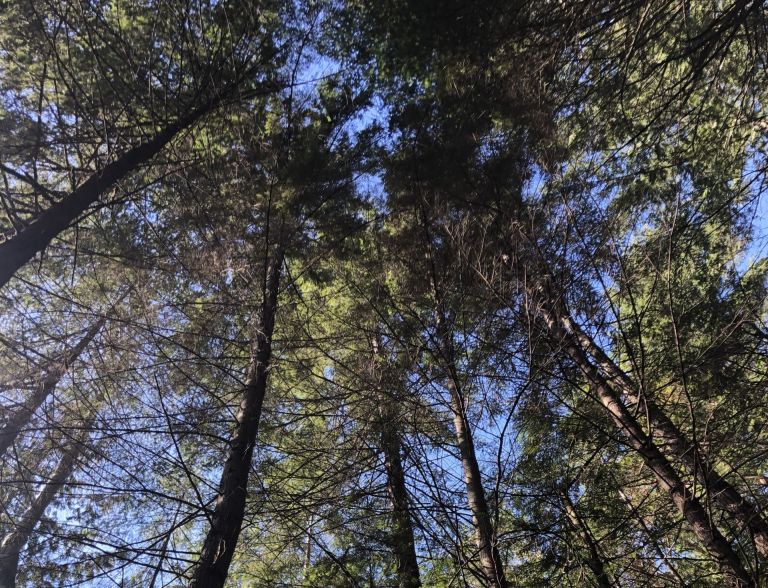
Urban forest strategy
Appendix D – Example actions/policies for local government urban forest strategies
Theme | Strategy statement | Adapted from | Indicators / targets |
General / multi-theme | Collaborate and coordinate across departments and agencies on a project-specific basis towards achievement of the canopy targets, goals and objectives. | District of Saanich Urban Forest Strategy (2024-2034) , pg 96. | |
Identify and implement tree planting targets for public land that support a 30% canopy cover target. |
| ||
For climate and disease resilience, plant a diversity of species, preferably native to our region that are pest resistant and adapted to a range of climate conditions, particularly temperature and moisture extremes. | City of Courtenay Urban Forest Strategy 2019 – 2050, pg. 49. District of West Vancouver’s Urban Forest Management Plan , pg 53.
| No more than 5% of any single tree species and no more than 15% of any tree genus. No more than 10% of any one species, no more than 20% of any genus, no more than 30% of any one family. | |
Through policy, develop canopy cover targets for each land use type to support an equitable distribution of the urban forest | City of Surrey Urban Forest Management Strategy , pg 63 District of Saanich Urban Forest Strategy (2024-2034), pg 83. | Canopy cover targets established | |
Choose species with a useful life expectancy and budget for young tree mortality. | City of Courtenay Urban Forest Strategy 2019 – 2050, pg. 81
| >30 years in 90% of the tree population and <3.5% young tree mortality. | |
Prioritize protection of significant trees and forest stands on both public and private lands. |
| ||
On public lands, formalize urban forest asset management and protection in corporate policies and systems. Ensure municipality-wide policies and practices are integrated to protect public and priority private trees, and the policies are consistently enforced. | City of Courtenay Urban Forest Strategy 2019 – 2050 , pg 86. | All urban forest assets are inventoried and systems in place for their conservation and management. | |
Plant ### (e.g., 300) trees per year on public land (in addition to replacement and restoration plantings) and work with residents to plant approximately 850 trees per year on private land. | City of Courtenay Urban Forest Strategy 2019 – 2050 , pg 89. | ### Trees planted per year. | |
Consider planting western North American species that do well in regions with similar climate conditions to those projected for our region in 30 – 50 years (e.g., see Climate Projections for the Capital Regional District [1] or General Climate Projections for Metro Vancouver[2]). | City of Courtenay Urban Forest Strategy 2019 – 2050 , pp 81 & 89. District of Saanich Urban Forest Strategy (2024-2034) , pg 95 | 90% of species in the inventory are suitable for future climate. | |
In natural areas, maintain natural forest extent and enhance natural forest habitat quality to Increase native biodiversity and ecosystem resilience. | District of Saanich Urban Forest Strategy (2024-2034) , pg 95 | Natural forest cover of all types ≥ 3,700 ha. 40-year planting target of >50,000 new (non-replacement) trees, seedlings, and understorey shrubs by 2064 in natural areas on public property. | |
Set neighbourhood tree canopy goals in consultation with the community to identify expectations and specificity regarding protection, character and function of the urban forest. |
| ||
Establish forums for interdepartmental, interjurisdictional and interagency communication to continuously improve tree management protocols and clarify tree management expectations across public and private lands. |
| ||
Develop policy for retaining soil and growing space for trees on private property in coordination with other Planning policy updates and sustainable site design goals |
| ||
Control invasive species that degrade forest ecosystems. |
| ||
First Nations | Collaborate with Indigenous communities to reflect their values and caring for lands and waters in [municipality’s] urban forestry program | District of Saanich Urban Forest Strategy (2024-2034) , pg 88. |
|
Invite engagement with Indigenous knowledge keepers to inform the approach to urban forestry initiatives and natural areas management. | District of Saanich Urban Forest Strategy (2024-2034) , pg 91. District of West Vancouver’s Urban Forest Management Plan , pg 55. |
| |
Allocate funding to support Indigenous roles and partnerships and explore opportunities to expand Indigenous involvement in urban forestry initiatives. | District of Saanich Urban Forest Strategy (2024-2034) , pg 88. |
| |
Land cover & land use | Regularly update urban forest data and technology and revise key planning and policy documents to respond to changes in land use.
|
| |
Monitor canopy cover every two years using satellite imagery, supplementing this with LiDAR data at least every five years. Assess other accurate evaluation methods as technology advances. | District of West Vancouver’s Urban Forest Management Plan , pg 54. |
| |
Require a minimum density of trees per hectare post-development to be achieved with retained healthy trees, new trees or replacement trees. |
|
| |
Prioritize tree retention and planting in public areas with low canopy and/or low tree equity scores. | District of Saanich Urban Forest Strategy (2024-2034) , pg 84 |
| |
Develop forest canopy targets by land use type or neighbourhood, in coordination with other planning policy updates and sustainable site design goals. | District of Saanich Urban Forest Strategy (2024-2034) , pg 92. |
| |
Increase canopy cover in conjunction with green infrastructure initiatives to improve rainfall interception and infiltration. |
| ||
Environmentally sensitive areas | Ensure tree replacement within ESAs require that replacement ratios meet or exceed Provincial Planting Criteria |
| |
Update the Tree Bylaw and Environmental Development Permit Areas to require planting only native and /or climate-suitable species as replacement trees in Environmentally Sensitive Areas. | District of West Vancouver’s Urban Forest Management Plan , pg 55. |
| |
Enhance forest ecosystem components in parks such as understorey vegetation to support birds and other biodiversity. |
| ||
Where appropriate, retain dead or dying trees and downed wood to sustain forest ecosystems and biodiversity. |
| ||
Hydroriparian (including marine) | Maintain hydrological pathways to support forest patches through management initiatives or bylaw changes that affect rainwater infrastructure. | City of Courtenay Urban Forest Strategy 2019 – 2050 , pg 86. |
|
Ecosystem connectivity | Use land acquisition or regulation to enhance protection of significant tree stands and corridors. | City of Courtenay Urban Forest Strategy 2019 – 2050 , pg 86. |
|
Develop and implement a 5-year plan for natural forest restoration on public lands that considers: · Site prioritization within or adjacent to a Biodiversity Habitat Network. · Representation of CDF forest types and ecosystems, | District of Saanich Urban Forest Strategy (2024-2034) , pg 86 |
| |
Species at risk | Plant trees to enhance bird and pollinator populations, including expanded use of native trees in park and street tree planting. |
| |
Meet or exceed legal requirements to protect nesting birds and other wildlife during urban forest management activities. |
| ||
Nature-based solutions to climate change | Aim for density in canopy cover and trees per hectare to account for mortality and improved heat mitigation over time. | City of Courtenay Urban Forest Strategy 2019 – 2050
| 35-40% canopy cover and 100-120 trees per hectare per block. |
Increase canopy cover in conjunction with green infrastructure initiatives to improve rainfall interception and infiltration. |
| ||
Increase tree planting to create cool streets and parks where vulnerable populations are at risk from urban heat. |
|
[1] Pacific Climate Impacts Consortium, 2024, Climate Projections for the Capital Region, report prepared for the CRD, https://www.pacificclimate.org/sites/default/files/publications/ClimateProjectionsCapitalRegion2024.pdf, accessed March 2025.
[2] Pacific Climate Impacts Consortium, no date, Climate Projections for Metro Vancouver, https://metrovancouver.org/services/air-quality-climate-action/Documents/climate-projections-for-metro-vancouver-2016.pdf#page=13&zoom=100,0,0, accessed March 2025.
Climate Strategy
Appendix E – Example actions/policies for local government climate strategies
Theme | Strategy statement | Adapted from | Indicators / targets |
Multi-theme | Stewardship tools will be developed for private land owners to adapt to and mitigate climate change by expanding on existing programs, such as Naturescaping, recommended plant lists, and invasive species management. | District of Saanich Climate Plan , pg 79. |
|
Urban forests will be protected and expanded in the long term through measures such as: · establishing / updating canopy cover measurement · creating a tree inventory · strengthening protections for existing trees on private and public lands · developing an Urban Forest Reserve Fund dedicated to enhancing the urban forest through such actions as planting trees and acquiring lands specifically for tree planting. | District of Saanich Climate Plan, pg 79. |
| |
Develop / implement a Biodiversity Conservation Strategy to provide direction and strategies to increase ecosystem resilience and reduce impacts to biodiversity from climate change. | District of Saanich Climate Plan , pg 79. |
| |
Natural areas will be expanded, connected and restored through a variety of strategies that will ensure their permanent protection and management to maximize ecosystem services and resilience, biodiversity and carbon sequestration potential. | District of Saanich Climate Plan , pg 80. | Carbon sequestration increases by # through land protection and restoration. | |
Determine the value of natural assets to services (e.g., storm-water management, pollination services, clean air, infrastructure cooling) and include in asset management and services planning. | District of Saanich Climate Plan , pg 80. |
| |
Develop a land acquisition and protection strategy to support delivery of key goals and services required for climate mitigation and adaptation (e.g., sequestration, drainage, flooding, biodiversity). | District of Saanich Climate Plan , pg 80. |
| |
Plant climate-resilient tree species. | ## climate appropriate trees planted by [date] | ||
Develop and complete an urban forest inventory and establish / update the Urban Forest Management Strategy using future climate projections. |
| ||
Conduct park condition assessments in all parks and adaptation measures developed to address climate impact risks (e.g. drought stress, heat events, wildfire smoke, storm damage, flooding). |
| ||
Develop a climate adaptation assessment checklist for rezoning and development permits. |
| ||
First Nations | Work with neighbouring First Nations to support climate adaptation initiatives that conserve and enhance habitat and protect property within the watershed. |
| |
| Work with local First Nations to conduct mapping and socio-cultural and ecological impact assessments of climate change on traditional food systems and undertake habitat restoration | City of Colwood Climate Change Adaptation Strategies, pp 27 & 28. | Emissions reductions associated with habitat restoration. |
Land cover & land use | Work with partners to explore carbon dioxide removal measures, such as restoration of coastal ecosystems and afforestation of non-forested areas. | District of Saanich Climate Plan, pg 80. |
|
Create / update Hazard Land and Steep Slope Development Permit Area Guidelines in the OCP and other pertinent bylaws to require geotechnical reports for new construction in areas at high risk of flooding and landslides. |
| ||
Apply a climate adaptation lens to the natural hazard, steep slope and environmentally sensitive DPAs during the OCP refresh. |
| ||
Identify hazardous lands and properties at risk from coastal flooding, sea level rise and landslide risk, and advocate to the province for support in purchasing these lands as part of the City’s long-term property management strategy. |
| ||
Increase the proportion of native ecosystems in parks and open spaces system and restore native ecosystem areas that are currently degraded. | City of Colwood Climate Change Adaptation Strategies, pg 29. | Natural and restored ecosystems provide more ecosystem services such as water filtration and absorption, carbon sequestration/storage, biodiversity, and soil stabilization. | |
Hydroriparian (including marine) | Prepare for the impacts of rising sea level and associated erosion and coastal flood risk. Develop a green shores strategy to help protect waterfront lands from flooding risk, while also protecting and restoring habitats. |
| |
Enhance watershed storage and impoundment to build resilience for urban streams within catchment areas for fish habitat use during low summer flows. |
| ||
Design and install green infrastructure (e.g. bioswales, bio-ponds, retention tanks) that will improve water quality and potentially provide low summer flow into fish bearing streams |
| ||
Coordinate with the RDN to complete a detailed watercourse habitat health assessment for urban watercourses within the city, including biodiversity maintenance and invasive species control targets.
|
| ||
Develop a sea level rise DPA with guidelines for new development/renovation and infrastructure placement in areas at risk of coastal flooding up to 2100. | DPAs adopted and guidelines for areas at coastal risk completed (% or #) | ||
Ecosystem connectivity | Use mapping tools to identify currently protected areas, sensitive ecosystems, biodiversity hotspots, SAR habitat, and locations to implement corridors for habitat connectivity. Identify network linkages to promote habitat connectivity. | City of Colwood Climate Change Adaptation Strategies, pg 33. |
|
Nature-based solutions to climate change | Grow the urban forest by planting #### new trees of diverse species by 20## and increase its resilience to a changing climate through suitable tree selection and management practices. | District of Saanich Climate Plan, pg 79. |
|