
First Nations
Land Code
The Land Code probably offers the greatest autonomy to First Nations in managing their own lands.
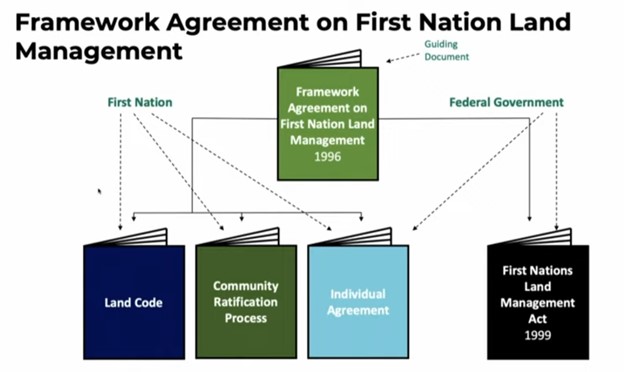
Under the Framework Agreement on First Nation Land Management Act (FNLMA), the federal government transferred to First Nations the right to enact a Land Code and manage and pass laws related to reserve lands. A Land Code is a way for First Nations to independently manage reserve lands and resources. It is a document created by First Nation communities to replace the land management provisions of the Indian Act.
Indigenous Self Determination Through Land Governance (Province of BC)
Description
To initiate the process, a First Nation first becomes a signatory to the Framework Agreement on First Nation Land Management, and then has the ability to create a Land Code that outlines how the community will work together to develop laws and policies for governing and managing their reserve lands and resources.
Once a Land Code is drafted and approved by the community, it becomes the basic land law of the First Nation. When it comes into effect, approximately 44 sections of the Indian Act that pertain to land management no longer apply, and Canada is no longer involved in the decision making of the First Nation’s land and resources. Canada continues to hold title to the land, but will have no management authority over the land. Instead, control of these aspects is recognized as under the governance authority of the First Nation. The Land Code does not have to be approved by a Minister or any federal department. The Framework Agreement is not a treaty and does not affect existing treaty or other constitutional rights of the First Nations.
The Framework Agreement provides First Nations with all the legal status and powers needed to govern and manage their lands and resources. While First Nations will not be able to sell their land, they will be able to lease or develop their lands and resources, subject to any limits imposed by their own community Land Code.
There are more than 50 Land Codes in effect in BC. The complete list can be found at https://laws-lois.justice.gc.ca/eng/acts/f-11.8/page-7.html and links to individual First Nations signatories can be found on the Lands Advisory Board’s Land Codes signatories map.
Several resources pertaining to Land Code, including a model Land Code (2021) that can be customized to the specific wishes of a community, examples of existing land codes, and steps in the process can be found through the Lands Advisory Board. The following section offers some key considerations to communities who wish to investigate preparing a Land Code.
A preparatory or companion process to a Land Code is development of a land use or land relationship plan, which outlines how a First Nation intends to manage their land, including zoning for activities such as residential, commercial, or conservation.
Related Legislation
The original ratifying legislation of the Framework Agreement was the First Nations Land Management Act (FNLMA), passed in June 1999. However, the FNLMA was repealed and replaced by the Framework Agreement on First Nation Land Management Act (FAFNLMA) in December 2022. The change was initiated by the signatory First Nations of the Framework Agreement to correct inconsistencies in the FNLMA and to provide clear and concise ratifying legislation that emphasizes the central importance of the First Nation-driven Framework Agreement.
First Nations Land Management – Unama’ki College (40 min)
Land Code Framework Agreement, Fort Nelson First Nations (10 min)
Key Considerations
It is important to note that the Framework Agreement applies only to reserve lands and does not deal with territories and redistribution of land and resources. However, under a Land Code, a First Nation has the power to manage its reserve land. It may exercise the powers, rights and privileges of an owner in relation to the land, grant interests, rights or licenses in relation to the land, manage the land’s natural resources, and receive and use all moneys acquired under its Land Code.
A Land Code makes it clear that a First Nation has the legal capacity to enter into contracts, borrow money, expend and invest money, and be a party to legal proceedings with regard to the land.
A Land Code enables a First Nation to enact laws regarding interests, rights or licenses in relation to reserve land, as well as the development, conservation, protection, management, use and possession of reserve land.
Advantages of switching from the Indian Act to a Land Code can include:
- Removal of the First Nation’s lands from the Indian Act under the 44 sections that pertain to land management.
- Removing the Government of Canada from reserve land management.
- Land law-making powers with no need for Ministerial approval.
- Protecting the signatory First Nations’ reserve land base.
- Ability for the First Nation to protect the environment.
- Right to manage reserve land and resources on that land.
- Inclusion of on and off reserve members in important decisions.
- Increased accountability to members.
- Protecting the applicable reserve lands from expropriation.
- Protecting cultural heritage.
- Supporting potential funding opportunities.
- Supporting economic development and on-reserve job creation.
- Improved efficiencies as Indian Act accountabilities are removed.
Drawbacks may include environmental liability; increased costs and effort to develop laws and policies; and the offloading by the Crown of fiscal, fiduciary, and environmental responsibilities. A Land Code also does not negate the burden of the social and cultural legacies of the Indian Act system, but it can be a large step toward community healing.
Story Maps
Communities that are considering establishing a Land Code may benefit from contacting First Nations who have signed the Framework Agreement. The case studies below help show the complexities of this process.
Sema:th/Sumas First Nation Land Code
The Sumas First Nation Land Code was enacted in November 11, 2011 under the original FNLMA. Under its Land Code, Sema:th First Nation Council has the power to make laws in respect of the development, conservation, protection, management and administration of Sema:th Lands; these are Sema:th Laws.
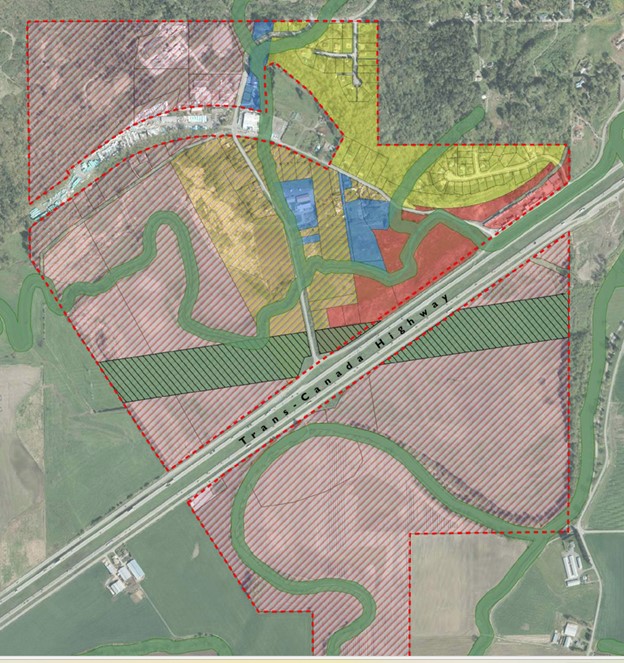
Following enactment of their Land Code, in 2013 Sema:th ratified its Land Use Plan which is based on an assessment of present conditions in Sema:th as well as projected land use needs of the community. The Sema:th Land Use Plan is the principal document within the community for land development and land use matters, and includes comprehensive policies that Sema:th will use to ensure that development proceeds in a manner that respects the vision and goals of Sema:th.
kʷikʷəƛ̓əm/Kwikletlem Land Code
In July 2020, the kʷikʷəƛ̓əm membership ratified its own Land Code. This gives kʷikʷəƛ̓əm the authority to manage and make decisions regarding the development and use of its lands on-reserve. This means kʷikʷəƛ̓əm now has the power to enact laws regarding the protection, development, use, possessions and management of its reserve lands and natural resources, and thereby honour its responsibility to preserve, protect, and enhance kʷikʷəƛ̓əm land, waters, resources, heritage, language and culture.
kʷikʷəƛ̓əm/Kwikletlem community members celebrate the passing of the Land Code, independence from the Indian Act, and šxwəlməxwaʔɬ təməxw (“This is our land!”) day.