First Nations
Key Biodiversity Areas
Key Biodiversity Areas (KBAs) are areas that support rare and threatened species and ecosystems, and key natural processes. They are defined by the IUCN as “a site that contributes significantly to the global persistence of biodiversity.”
KBAs are important for the long-term health and well-being of animals, plants, waters, and the land but they do not confer any type of legal protection; instead they create an awareness of the importance of a place for biodiversity. KBAs occur across all types of landscapes and marine areas, and in many instances exist because of the stewardship and relationships Indigenous Peoples have with these species and places.
Key Biodiversity Areas – Canada’s Critical Places for Nature -Birds Canada
Description
The Canadian Key Biodiversity Area (KBA) program (https://kbacanada.org/) identifies sites of importance for biodiversity across Canada, collaboratively looking at places on lands and waters across the territories of hundreds of First Nations, Inuit, and Métis communities and groups. In most cases, communities already know the values these sites represent. In many cases, these sites only persist because of the careful stewardship by Indigenous Peoples.
To qualify as a KBA, a candidate area must go through a quantitative evaluation process using specific criteria set out by KBA Canada and by the International Union for Conservation of Nature (IUCN) global standards for the identification of KBAs. There are 11 criteria grouped under five categories, which can apply to any and all species groups, as well as ecosystems. A site needs to meet the thresholds for at least one criterion to qualify as a KBA. For more in-depth information on the criteria, refer to the IUCN’s A Global Standard for the Identification of Key Biodiversity Areas.
While the IUCN criteria were not co-developed with Indigenous Peoples, KBA designations can complement and support Indigenous-led conservation and stewardship based on Indigenous values and priorities.
Any individual or organization can use the National KBA Standard and the Global KBA Standard to identify sites contributing significantly to the persistence of biodiversity in terrestrial, inland water, and marine environments in Canada. KBA proposals are submitted through the Canadian KBA Coalition.
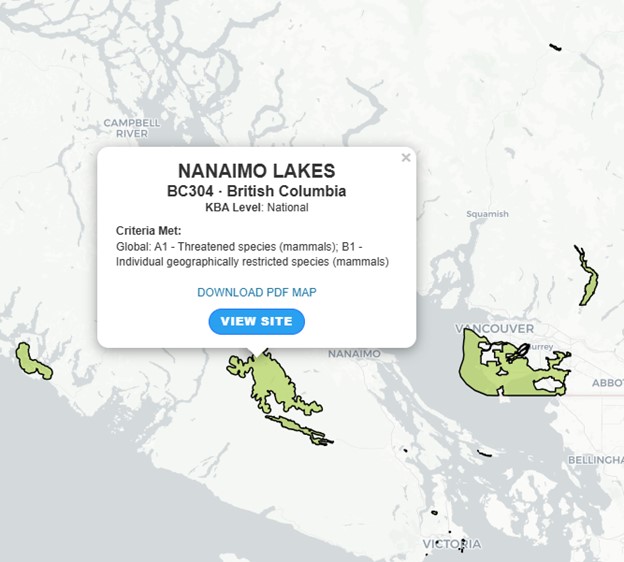
Key Biodiversity Areas (KBAs) located on the south west coast of BC.
Key Considerations
Establishing a KBA on a Traditional territory (or anywhere else) may bring heightened awareness of the ecological values of the area, but it does not confer any greater protection for the values identified than may already exist. It also may not necessarily result in benefits to the communities involved, except perhaps for the possibility of enhanced tourism or support from conservation organizations in carrying out conservation activities.
First Nations may wish to consider pursuing a KBA for an area in their Territory if there is concern for degradation due to development or other threats. By working collaboratively with local communities and conservation organizations on a KBA proposal, stronger relationships may be built that will help achieve conservation results.
“Conservation can only happen when people value nature. KBAs point us to the most critical places for nature, but what we do is up to all of us. From land use planning to Indigenous-led conservation efforts to community-based caretaker programs, KBAs provide a compass for conservation to ensure we are protecting the most important places for future generations.” – Justina Ray, President and Senior Scientist, Wildlife Conservation Society Canada.
Challenges
The KBA proposal process itself has met with some criticism. In a report undertaken to evaluate compatibility between the KBA proposal process and Indigenous Peoples’ and local communities’ environmental priorities, it was found that no meaningful compatibility exists between the KBA proposal process, as it now exists and is being implemented globally and in Canada, and the priorities of Indigenous Peoples and local communities. The KBA evaluation process relies on federal and provincial criteria for identifying rare or threatened species; it does not take into account species of cultural concern. Often there is no overlap between the two sets of species. This approach is at odds with the more holistic Indigenous way of seeing the world.
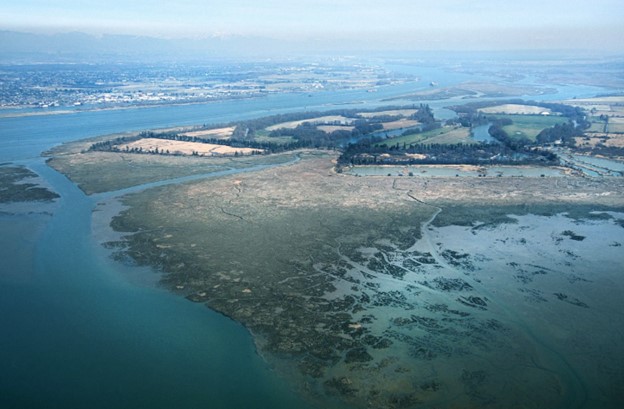
Fraser Estuary classified as a KBA – Photo by Duck’s Unlimited Canada
Story Maps
Yat’aayi Héen / Warm Bay Hotsprings KBA
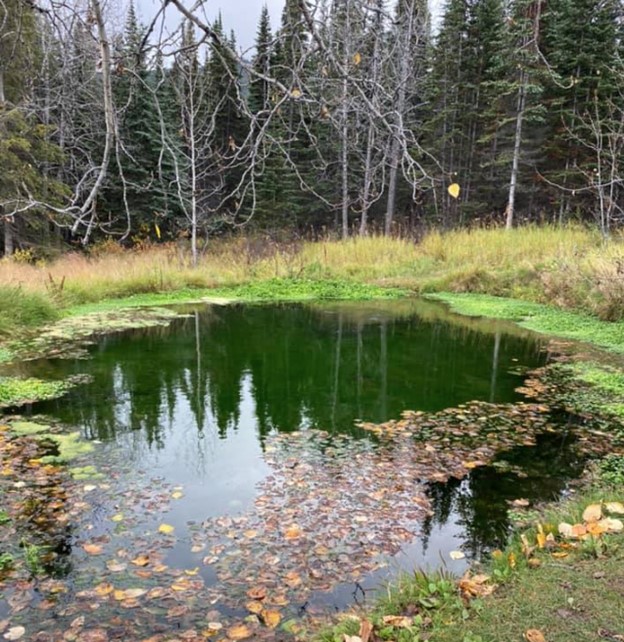
Yat’aayi Héen / Warm Bay Hotsprings KBA lies on the core traditional lands of the Taku River Tlingit First Nation. It is a geothermal spring complex located in northwest BC, south of the town of Atlin. Consisting of two separate springs that are disconnected above ground, these springs have been recognized as a healing site for Taku River Tlingit, who also used the area for fish and caribou smoke houses. The unusual configuration of these springs supports the entire population of the Critically Imperiled Lake Chub (Couesius plumbeus pop. 3)—a unique taxon endemic to the site. The springs are surrounded by boreal forest and have created tufa deposits which are uncommon (deGroot and Pojar 2009). Although the springs are on private property owned by Taku River Tlingit First Nation, the springs on the east side of Warm Spring Road are commonly thought to be public land and are regularly used by the public. The proposal to establish the site as a KBA was led by Wildlife Conservation Society Canada with Taku River Tlingit First Nation.