Stories
Galiano Ecological Forestry Project at Quadra Hill
Based on a conversation with Adam Huggins – RPBio, Restoration Coordinator at the Galiano Conservancy Association. Written by Amy Melhus
The forest restoration project on Quadra Hill is a part of a larger 5-year program initiated by the Galiano Conservancy Association in partnership with Indigenous community members called ‘Restoring the Balance‘.
Restoring the Balance aims to address many of the issues that the forests on Galiano Island face, from the dense canopy to deer overpopulation and the lack of biodiversity of both native and culturally important plants. Restoring the Balance involves the revival of forest management practices such as thinning, support for Indigenous-led hunting to regulate the deer population, and cultivation of native and culturally important plants.
What was the issue that this project wanted to address?
On Galiano Island, there is a long and complicated history of logging and colonization. Between the 1960s and 1990s, large portions of the island were logged and clear-cut. Many of these areas were regenerated or replanted as Douglas-fir monocultures.
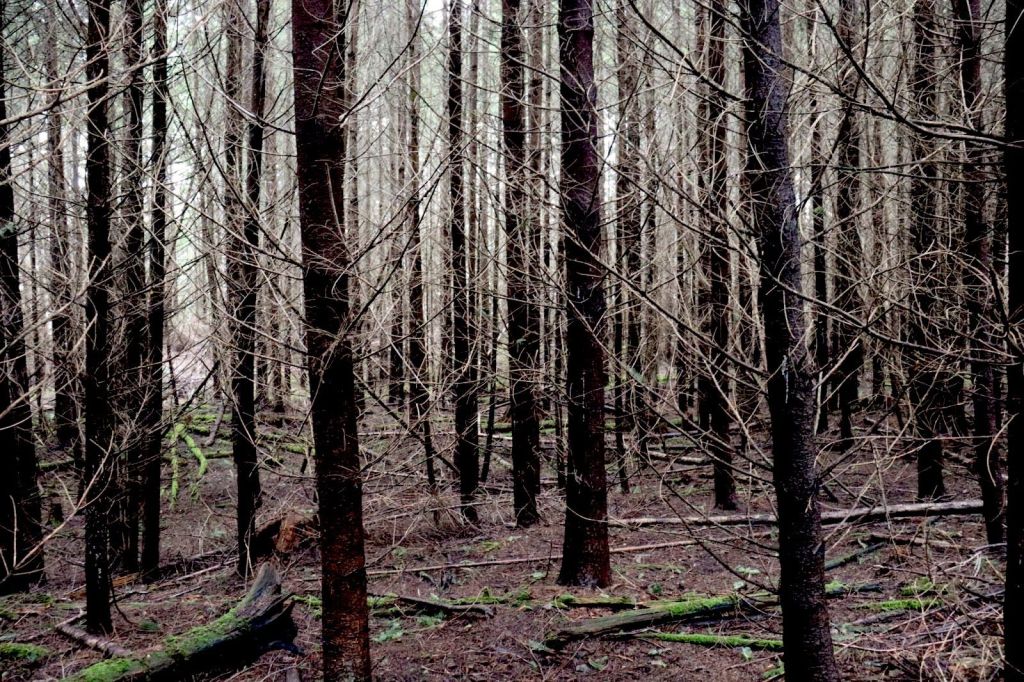
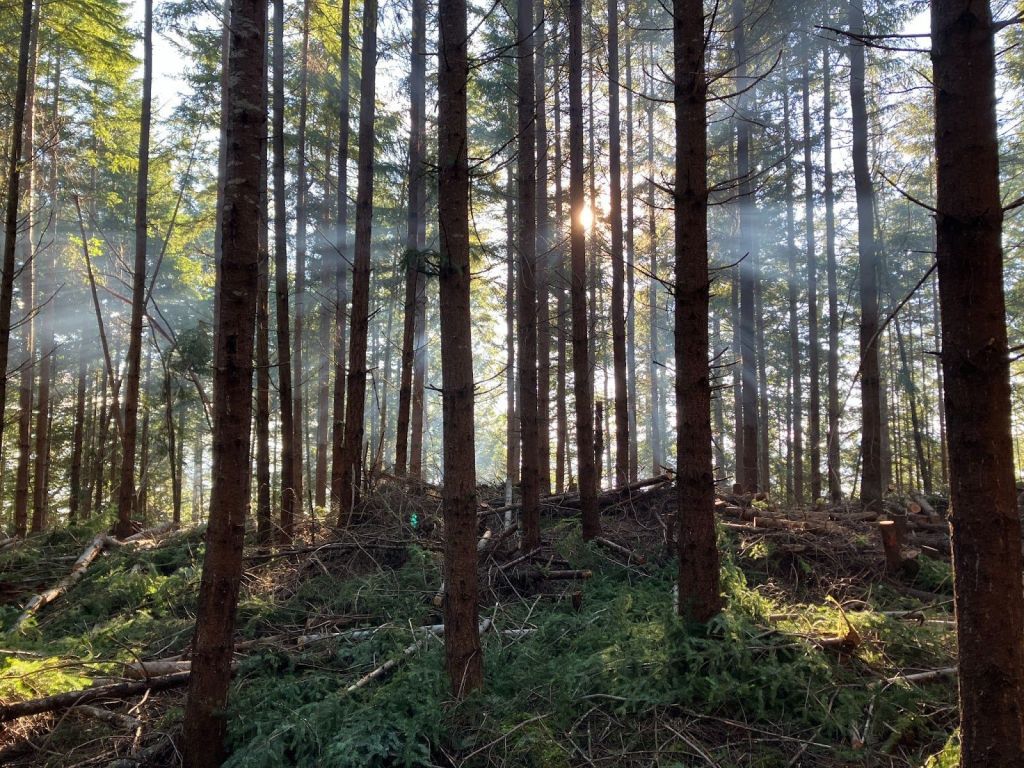
As a result, Galiano Island is now covered in extremely dense plantation-style forests with little to no diversity and a closed canopy that does not allow for understory growth due to a lack of light. Combined with the overpopulation of deer on the island, what does grow in the understory is quickly eaten away.
In their current state, the young forests on Galiano pose a significant risk to the community because they create ideal conditions for a devastating wildfire. The density of the trees, the amount of fuel and the lack of forest breaks from large roads or a centralized settlement area all contribute to the increased wildfire risk.
How did the project address the issue of wildfire risk?
The Quadra Hill site is a pilot project for Restoring the Balance. It was inspired by restoration work the Galiano Conservancy completed in the Pebble Beach Reserve in the early 2000s to aid in improving forest health and biodiversity.
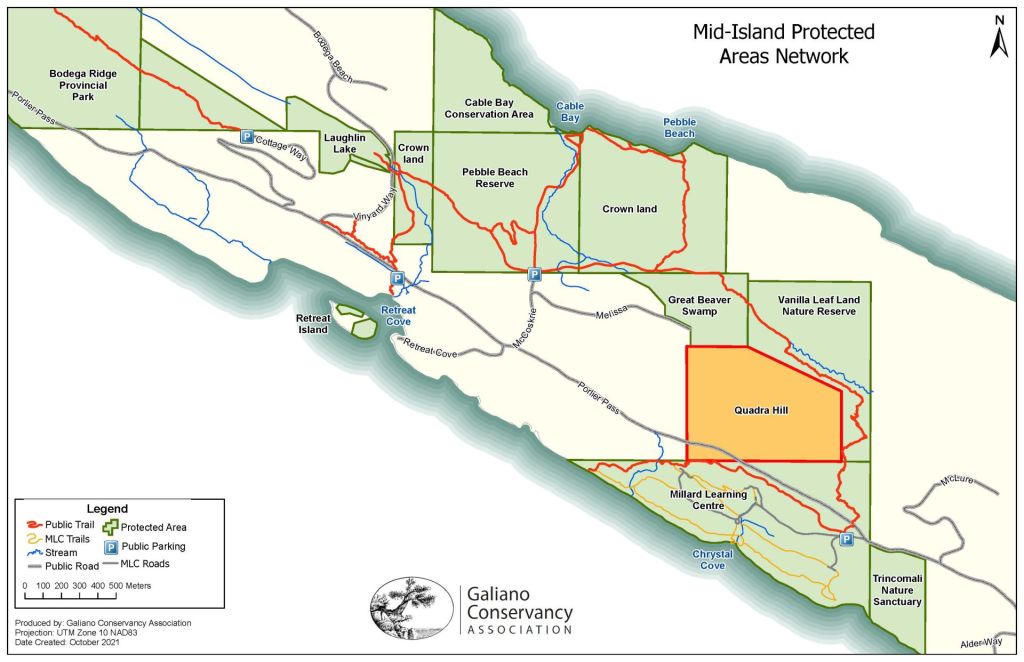
Quadra Hill is a 47-hectare (ha) plot of ecologically-sensitive and diverse land within the Mid-Island Protected Areas Network owned and managed by the Galiano Conservancy. Quadra Hill borders protected areas to the north, east, and south, providing direct connectivity along 77% of its 2755 m perimeter. The remainder of the perimeter borders Retreat Cove Farms, one of the largest contiguous mature forests on Galiano Island, which, like Quadra Hill, has been identified for its high conservation value.
Within this plot of land, there are many diverse ecosystem types, including wetlands, mature forests, and young plantation forests. The Ecological Forestry Project was initiated to improve forest diversity and make the young forest less of a risk for large wildfires.
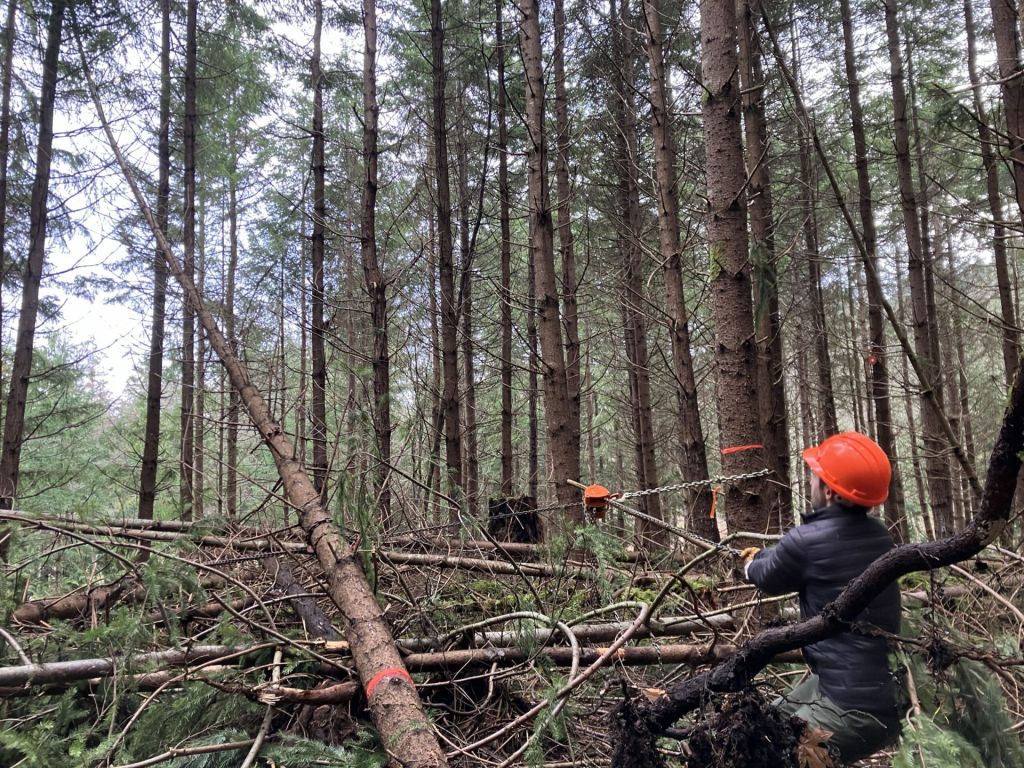
Field surveys were conducted in plantation forest plots, and trees were individually marked for falling. The Galiano Conservancy collected data on forest density, live crown area, woody debris composition and dangerous tree locations with students from the University of Victoria. The land was then mapped to locate areas where treatments would be best suited.
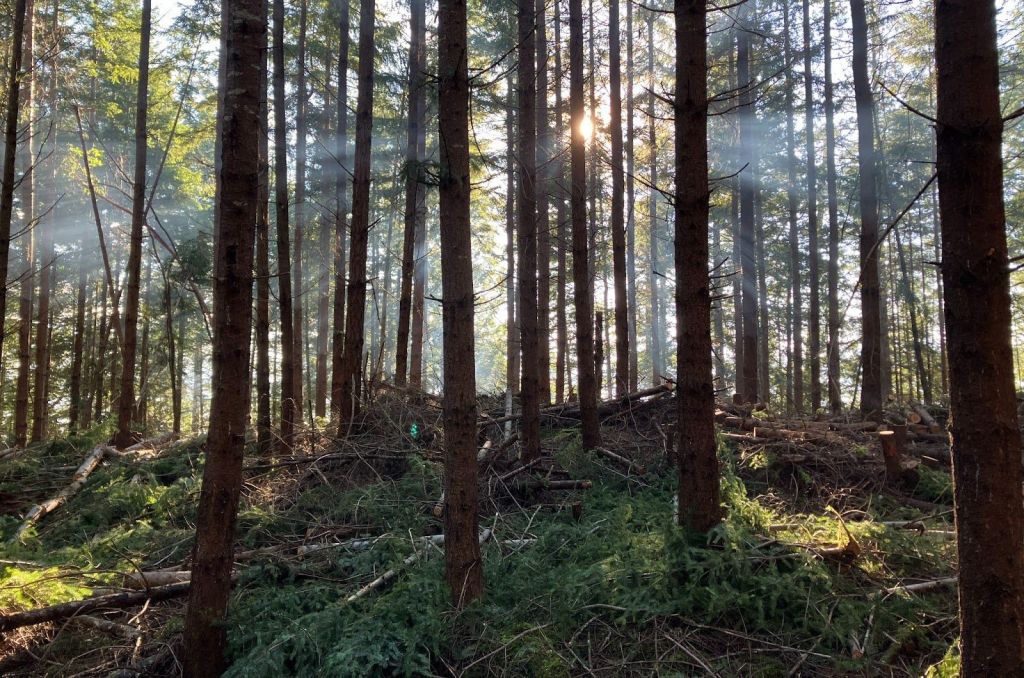
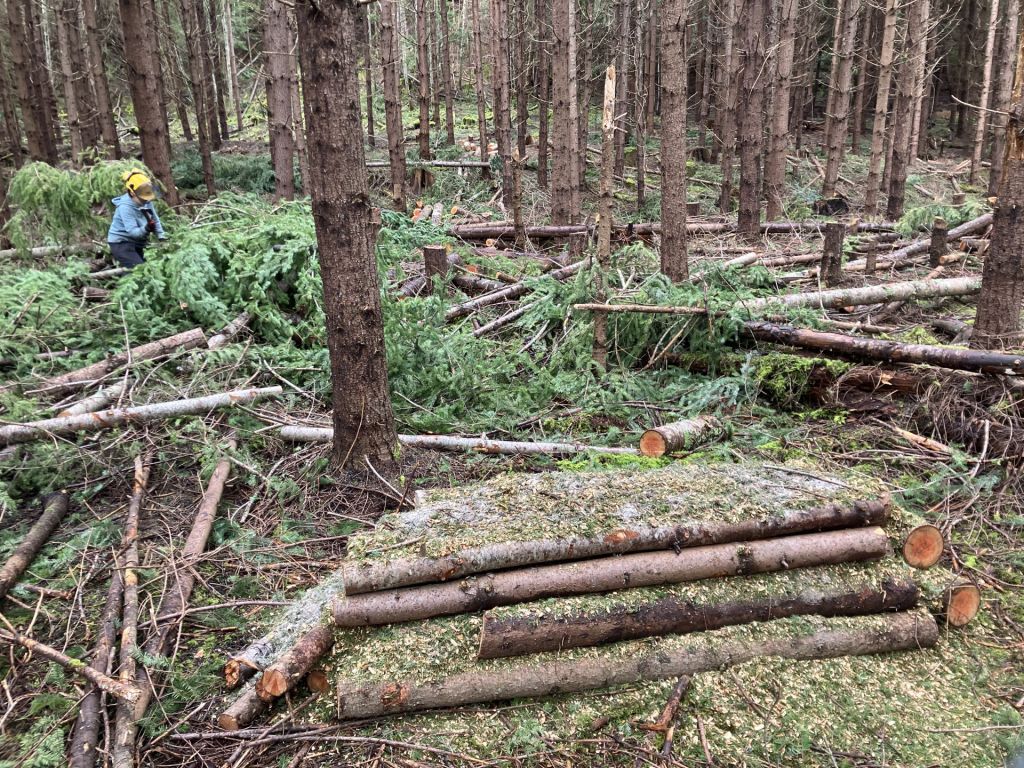
The primary treatment was variable density thinning, achieved by removing between 40-60% of the trees to create larger gaps within the canopy where small gaps existed previously and creating new gaps entirely in dense areas. The work was guided by a Forest Restoration Prescription produced by renowned ecoforester Herb Hammond and professional biologists working for the Galiano Conservancy.
Along roadways, all fuels within a 10-meter distance of either side of the road were removed to reduce the risk of human ignitions, which are the only significant source of ignitions in the Gulf Islands. Fuel was also removed alongside trails, which allowed the team more comfort for leaving some woody debris deeper into the forest, where less human activity occurs. Additional treatments included girdling (the process of removing a ring of bark around the tree trunk to slowly kill the tree), pruning of lower branches, and snag creation through topping. Restoration treatments were completed between October and December of 2024.
The Firewise project occurred on almost 10 hectares, with 6.5 hectares being treated, around one hectare being fenced and two hectares used as a control. In the control zone, only the roadside fire management was completed, and a portion of the land was fenced to exclude deer.
What was the removed wood used for?
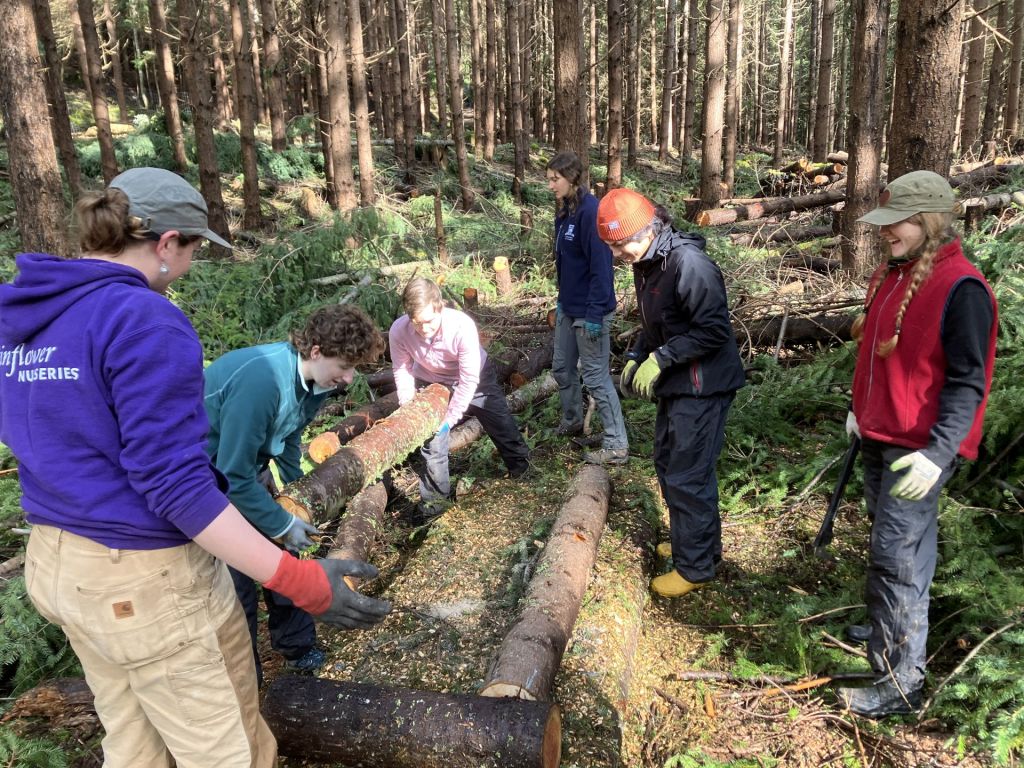
Most of the trees that were felled were left on the ground in the interior of treatment plots and were bucked as needed to ensure contact with the ground to accelerate rot.
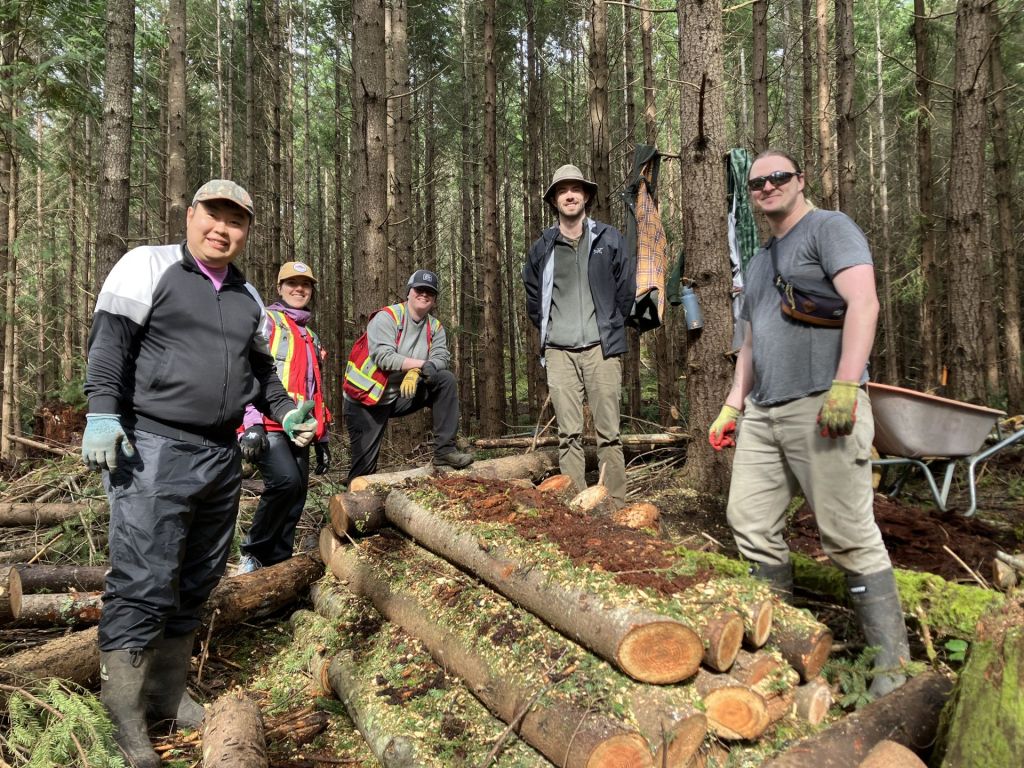
Woody debris generated from clearing the 10m buffer areas along roadsides was stockpiled for use in a wetland restoration project elsewhere on the property, scheduled for fall of 2025. Some wood was also chipped and made into biochar.
As Galiano has a firewood shortage, future projects may include the sale of a portion of the thinned trees as firewood back to the community. The goal is for funds generated from firewood sales (and other sustainable economic use of thinned material) to help “fuel” future forest restoration projects, on both protected and private lands.
What was public opinion about the project?
Galiano Island residents recognize the importance of making the forests safer and mitigating the fire risk. When comparing a forest stand that has been treated for the project by thinning to a non-treated stand, the public perception of a treated stand is better than that of a non-treated stand. The thinned forest is far less dense, making it more appealing to the public. This is the reason that the Galiano Conservancy believes they received no negative pushback from the public.
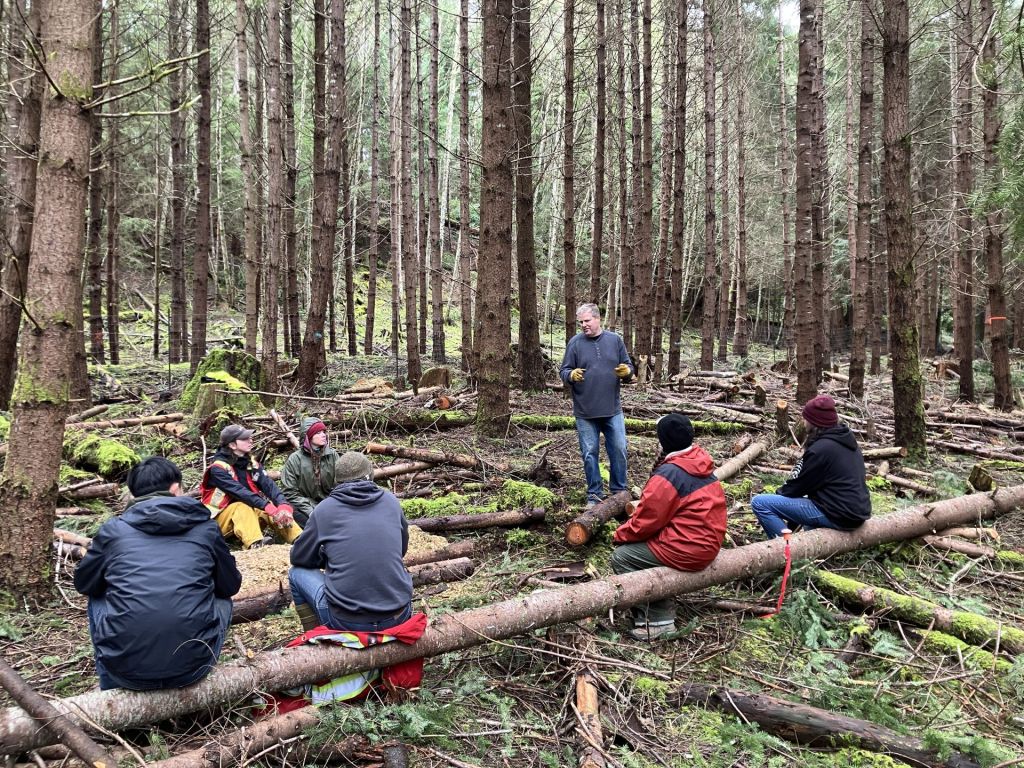
A round table meeting was held in January of 2025 with Indigenous community members, fire department chiefs, and private forest lot owners to discuss future forest restoration projects on Galiano Island. There was unanimous support from all attendees of the round table meeting on the work on Quadra Hill, as well as for its expansion.
What were challenges faced?
As Galiano is a small community with around 1400 residents, the lack of certified tree fallers on the island created an issue. The project was completed by hiring certified fallers from neighbouring Mayne and Penelakut islands to fell larger trees and employing local forestry professionals to complete the remaining treatments. One of the goals of the Restoring the Balance program is to train local certified fallers on Galiano Island to help facilitate future projects.
What permits were needed?
Since the project was completed on privately owned land that was zoned for forestry, there was no need for permits. However, all private forest owners must comply with the Water Sustainability Act, Drinking Water Protection Act, Environmental Management Act, Wildlife Act, Assessment Act, Wildfire Act, as well as the Fisheries Act, Migratory Bird Convention Act, and the Species at Risk Act.
What was the cost of the project and funding source?
The total cost of the Quadra Hill forest restoration project was around $100,000, including planning, consultation, and community education portions. The cost of implementing the forest restoration treatments averaged at $6500 per hectare.
The project was funded by Environment and Climate Change Canada’s Nature Smart Climate Solutions Fund, which also contributed to securing the property. A secondary source of funding was a grant from the Victoria Foundation as a part of their Climate Intake Project for nature-based climate solutions and restoration. A third source of funding was the Habitat Conservation Trust Fund. Finally, the Galiano Conservancy used additional money given to them by small funders and as donations.
What is the plan for the future of the project?
Quadra Hill borders protected areas to the north, east, and south, providing direct connectivity along 77% of its 2755 m perimeter. The remainder of the perimeter borders Retreat Cove Farms, one of the largest contiguous mature forests on Galiano Island, which, like Quadra Hill, has been identified for its high conservation value.