
Examples
Beaver Dam Analogues
A conservation with Neil Fletcher, BC Wildlife Federation
Written by Amy Melhus
This project aims to bring beavers back to the landscape. Beavers engineer ecosystems by building dams. Beaver dams provide valuable ecosystem services such as wetland creation, flood control and water quality improvement through filtering of pollutants.
Beavers used to live within most streams across Canada, prior to colonization, influencing the hydrology of the catchment and surrounding ecosystems. By creating dams on rivers, beavers create wetlands which increase biodiversity and habitat for aquatic animals.
During the peak of the fur trade, beaver populations swiftly declined and along with it, the benefits they provided to ecosystems. Human settlements and the building of large-scale dams has interrupted the natural ecosystem equilibrium, leading to ecosystem degradation and a decrease in resilience to effects of climate change. The increase in impermeable surfaces has meant that the manner in which the land used to hold water has changed, leading to an increase in drought through the summer and an increase in the frequency and severity of flood events.
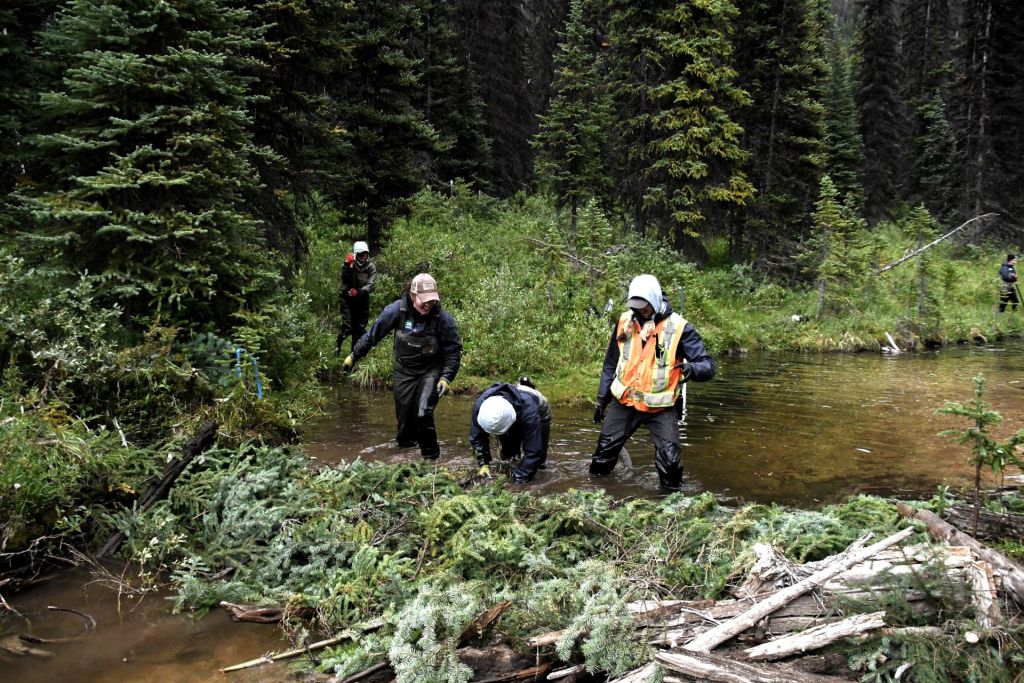
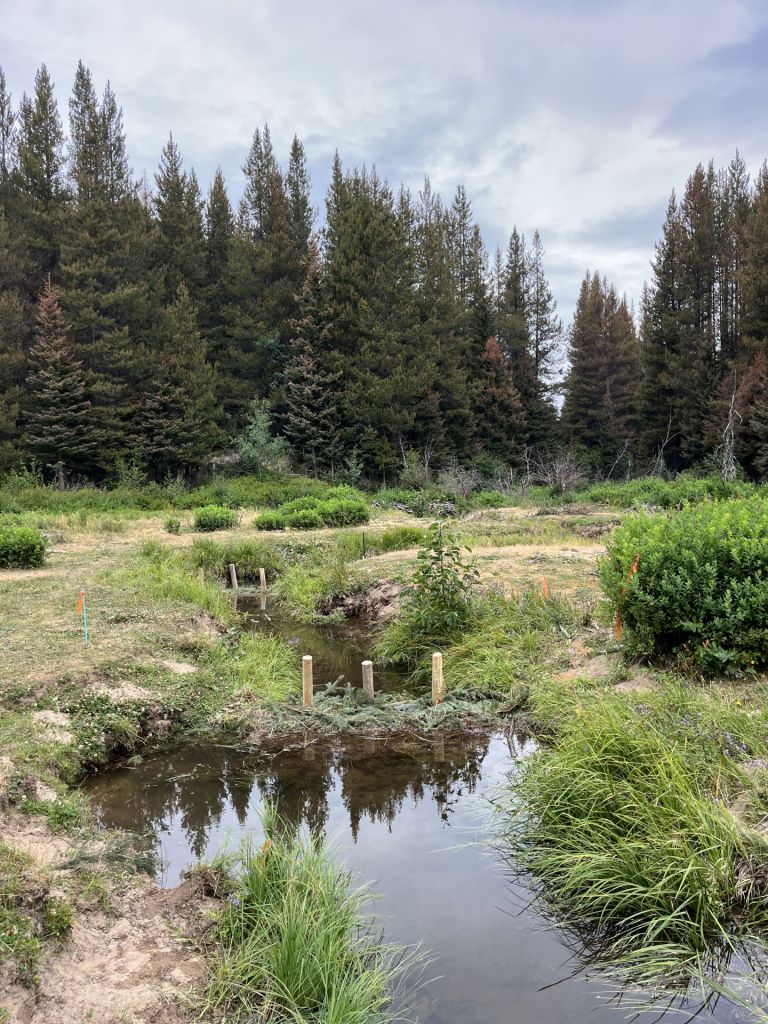
The BC Wildlife Federation’s (BCWF) project aims to install 100 different BDAs across BC, with a lot of the work being done around the Nicola Valley. So far, the BCWF has started projects on six different streams with a goal of completing five more in the 2025 season. With these six new projects, the goal of 100 BDA installations will be surpassed.
What was the issue that this project wanted to address?
What is the best time to install a Beaver Dam Analogue?
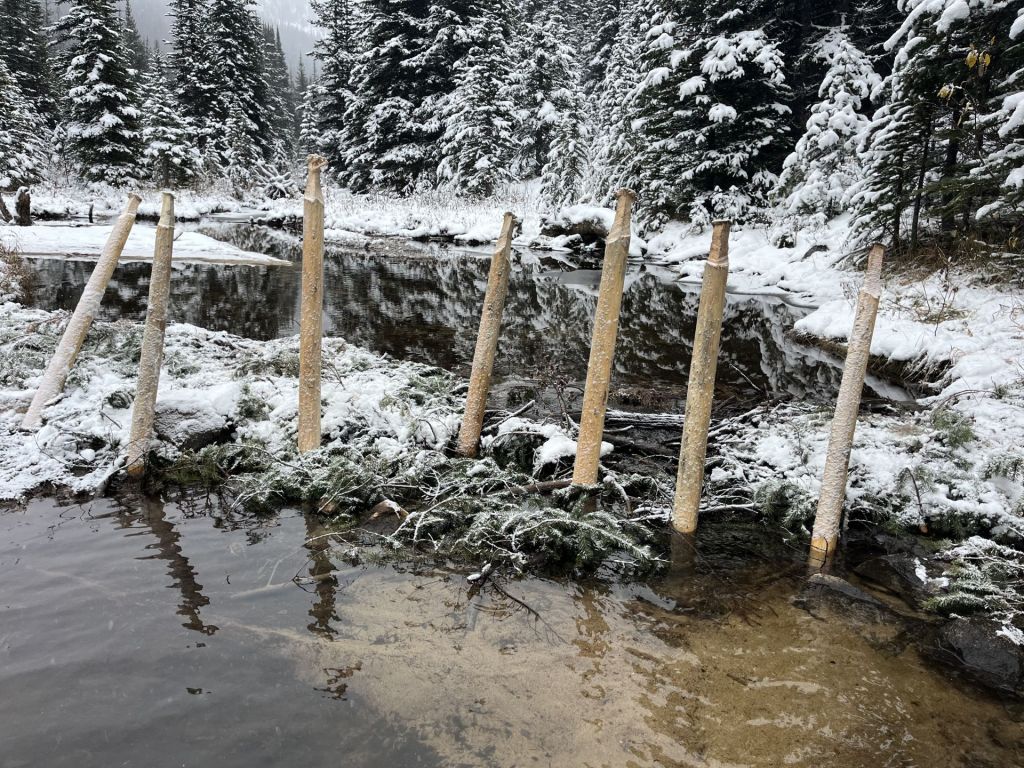
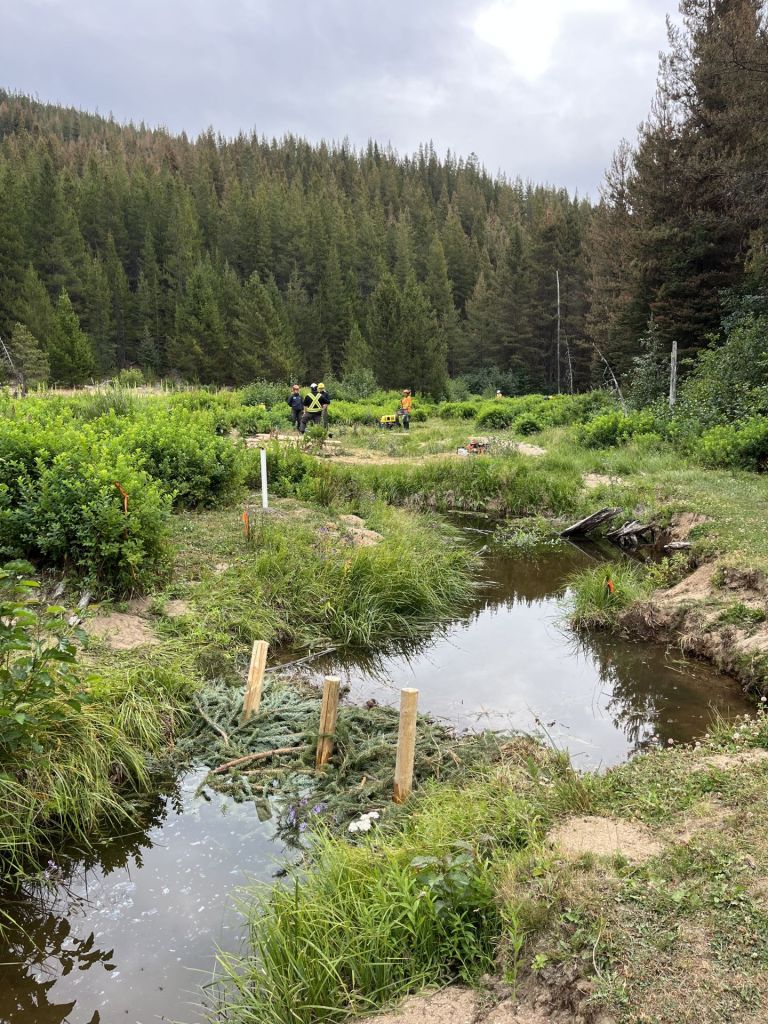
BDAs should be installed within the fish window, which is the time of year when instream works have the least impact on fish and fish habitat, from mid-August to September. During the fish window, the stream system is often in a low flow period. However, dam installation is best done during a time where there is more water in the system, and sometimes this doesn’t align with the recommended stream disturbance windows (i.e. fish windows). When the system is in high flow, you can see the waters response to the structure immediately. This helps you understand where the water is being directed and respond with additional structures to ensure the intended water pathway is met. Building during higher flow periods is also beneficial to limit the downstream risk when the flow is reduced downstream temporarily as the structures fill up with water. However, high flow can cause issues for building the BDA as the materials often float. This is why the installation of posts is often necessary to help anchor the materials and branches in place, , especially in higher power streams. This helps to build a better, more stable structure that will be able to withstand the maximum flooding of the hydrological system. Installation is not easily done during the wintertime due to frozen ground.
What were the costs of installation?
Much of the cost of this project came at the beginning with the purchase of monitoring equipment. This included flow meters for measuring stream flow, turbidity monitors which measure the amount of suspended particles in water, and three permanent ground water wells per site.
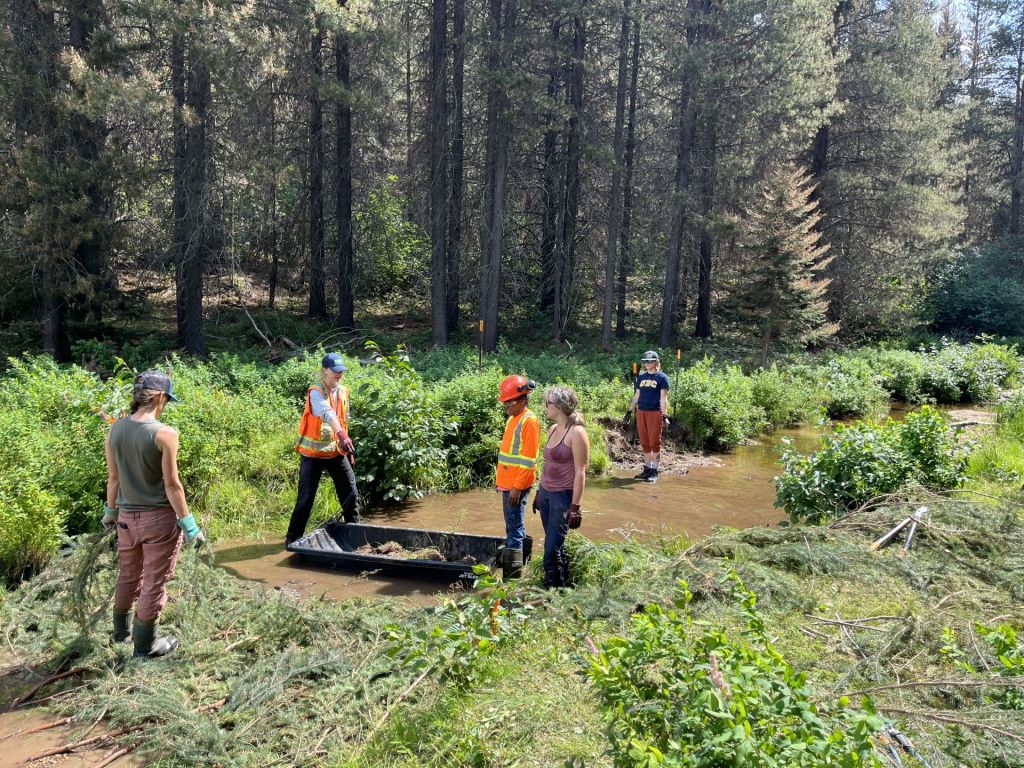
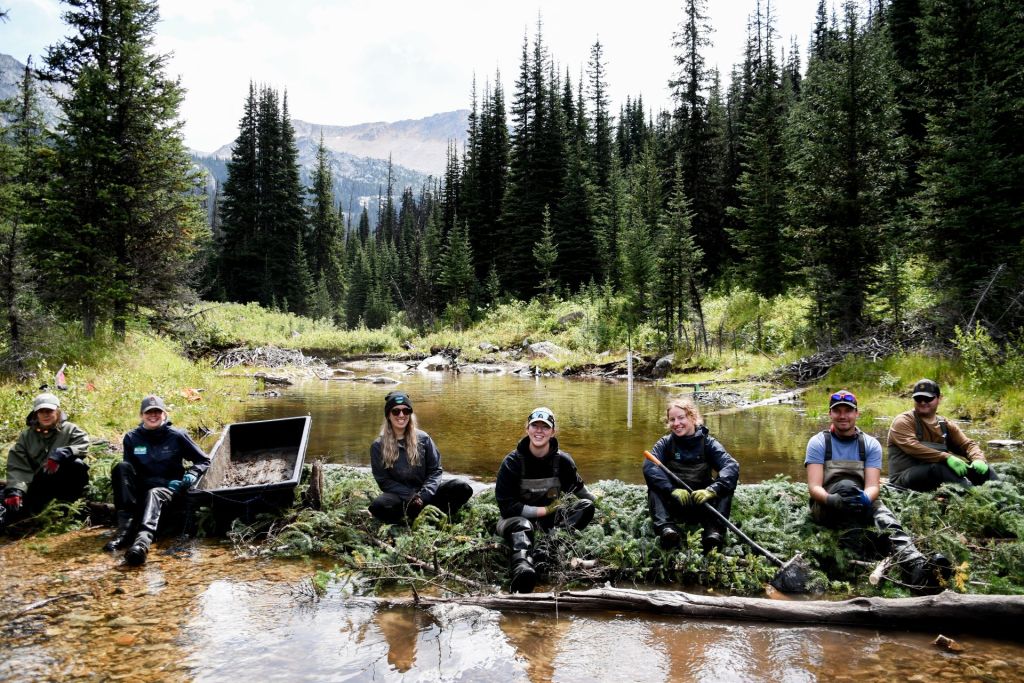
Wages and travel costs are generally a good portion of the costs. A typical BDA installation requires around five to ten people working on the site from preparation to installation and monitoring, when completed by hand. On many sites, additional actions are carried out to improve ecosystem health. This can include riparian planting, cattle exclusion fencing and removing other structures such as old irrigation pipes.
The actual installation of a BDA is low cost as branches, sediment and woody vegetation for construction are taken from area immediately surrounding the site when possible. This keeps the materials cost of the project low. Untreated wood posts are often, but not always, needed to provide a support structure for the BDA. The posts cost around $5-6 per post with the amount needed varying dependent on the width of the stream. These costs may not be necessarily required for every BDA project, but are a part of our project as we aim to better understand the effectiveness of the project.
If beavers are not present on site to take over the maintenance, seasonal trips back to the site are required to ensure the BDA retains its structure. Maintenance can include adding posts or filler material to ensure the BDA does not wash away.
With regular trips back to the site three to five times a year for monitoring and maintenance purposes, the overall cost of installing a BDA project is around $5,000 per project lifetime. It can vary widely depending on a variety of circumstances. This is around one fifth of the cost of a traditional stream restoration project in BC such as a concrete dam or an irrigation pipe.
However, the BCWF has plans to reduce these costs by employing local community members or First Nations to take over or supplement the monitoring and maintenance tasks. This would decrease the overall cost by reducing the amount of staff travel time needed. When beavers are present on site, they take over the BDA maintenance making it unnecessary for much human intervention. The BCWF is currently working on identifying new BDA sites for the 2025 field season where beaver release would be possible.
Permits needed
The BCWF currently utilizes Section 11of the British Columbia Land Act on Crown land sites as well as a ground water licence under the British Columbia Water Sustainability Act for private land sites (fee for permit varies based on size of affected area).
A Department of Fisheries and Oceans (DFO) Request for Review was needed as the project occurred in water that could potentially affect fish or fish habitat. This permit has no direct cost for application and will often take up to 60 days for review.
Wildlife and amphibian salvage permits from the Government of BC were also needed. Finally, Archeological Considerations were needed such as a Preliminary Field Reconnaissance (PFR) done by an archaeologist”.The price of a PFR varies from $1000-$5000 depending on site size, location and complexity. This is done to identify if there are any Indigenous significant, historical or cultural sites in the area. A PFR is required if the area in which the project occurs has an uncertain presence of archaeological sites. If a archaeological site is found, or is deemed highly probable, there may be other associated costs should the project continue to proceed, with the next step often requiring an Archaeological Impact Assessment led by trained archaeologists .
Each permit includes a site-specific application with surveying and detailed records needing to be submitted to the authority before the permit will be issued.
Challenges faced
This project had initial uncertainties with the BC Dam Authority and Water Authorization Specialists were trying to understand how this project fits in with the work they do. With the BDAs being built a temporary solution, there were questions about their impact and importance. These initial challenges were overcome once BDA success stories from cases elsewhere were shared with authorities. Quickly the government, DFO and the Dam Authority , water authorization branch became “supporters in principle” of the BCWF project and risks were deemed to be negligible on the proposed projects.
The BDA installation sites of this project are located within the upper areas of the watershed, and not in lower mainland of BC as it can be very hard to locate sites where landowners are willing to have dams built. With the creation of a dam comes the creation of wetlands and ideally beavers soon after. As beavers are known to be tenacious creatures who like to build to their own standard, property owners can be reluctant to create a space for them. The risk of losing trees and flooding landscapes is a common concern.
This is where public education becomes important. By educating property owners on the importance of wetlands and beavers for climate change mitigation as well as teachings about what can be done to reduce the impact of the beaver’s destruction, the project aims to be welcomed onto more sites in the future.
Has the BDA project been successful in meeting initial goals ?
BDAs are a very successful way of restoring wetlands and watersheds. Beaver based restoration projects have been widely used across the USA for years. BDA projects throughout the USA have shown the ability to trap sediment and create clear, filtered water downstream (Diamond, 2023).
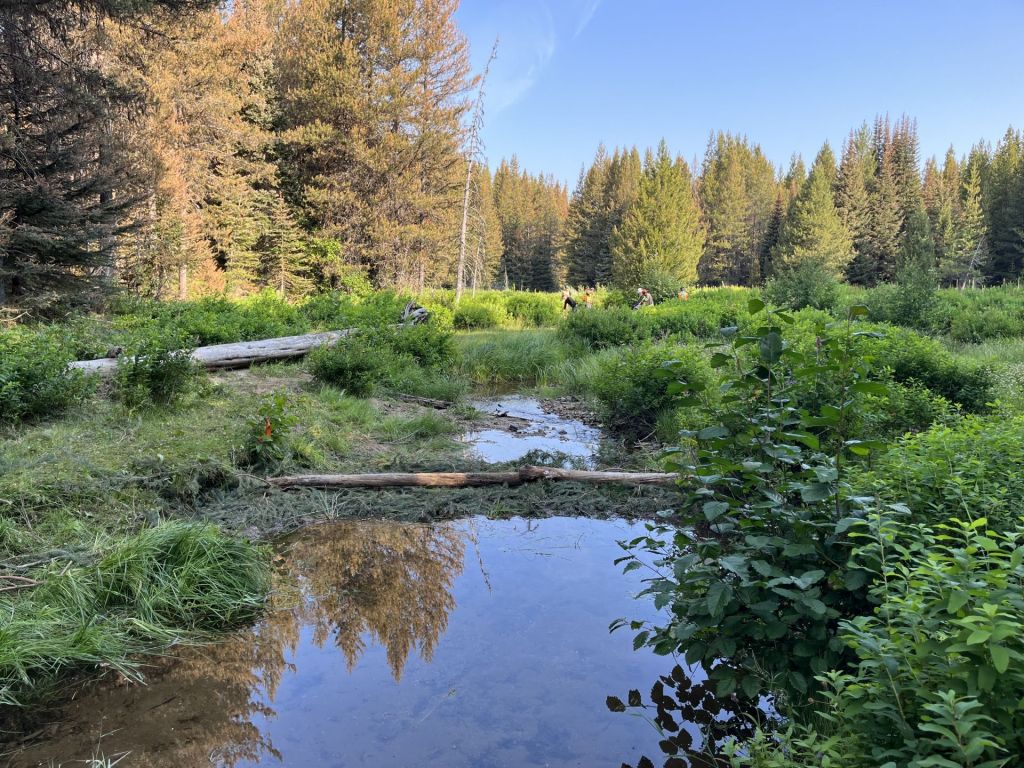
There is evidence that BDAs can provide wetland restoration and habitat creation in the short term. However, long term effects of many of these projects in BC are not known as it is too early to tell. Post-construction monitoring of the structures by the team during the Spring freshet, suggest that most of the structures have been able to withstand highflow conditions, and have had immediate effects of reconnecting creeks to their floodplains, and increasing groundwater storage.
The BCWF project is only in its second year, so it is hard to determine if the installations have been successful. Monitoring is needed across all sites to understand how BDAs impact the hydrology and biodiversity of the watershed they are installed in.
What is the plan for the future?
The 2025 season of this project will involve installing more BDAs on at least five different stream projects with site locationswith site locations in the Thompson Okanagan, and the East Kootenays. There will be monitoring occurring across all BDAs that were installed during the 2024 season to determine their success and what could be done better in the future. Monitoring for beaver presence is also part of the process.
Alongside this, the team at BCWF is also hoping to create a tool for other teams to use to be able to install BDAs of their own. The promotion of small-scale restoration projects like this one can help us to restore the land’s ability to protect against climate change related disasters at a low cost compared to traditional practices.