Examples
Shxwlistexw te Sqwá:la Shxweli: Care for the Life Spirit of the Hope Slough Project
by Xwchíyò:m (Cheam), Sqwá (Skwah) and Shxwha:y (Skway) First Nations
Information from a talk with Roxanna Kooistra, Environmental Manager, Cheam First Nation.
Written by Amy Melhus
Photos courtesy: Cheam First Nation
Cultural and Historic background about Hope Slough
A slough is defined as a wetland, typically a lake or a swamp, that is often a backwater of a larger body of water.
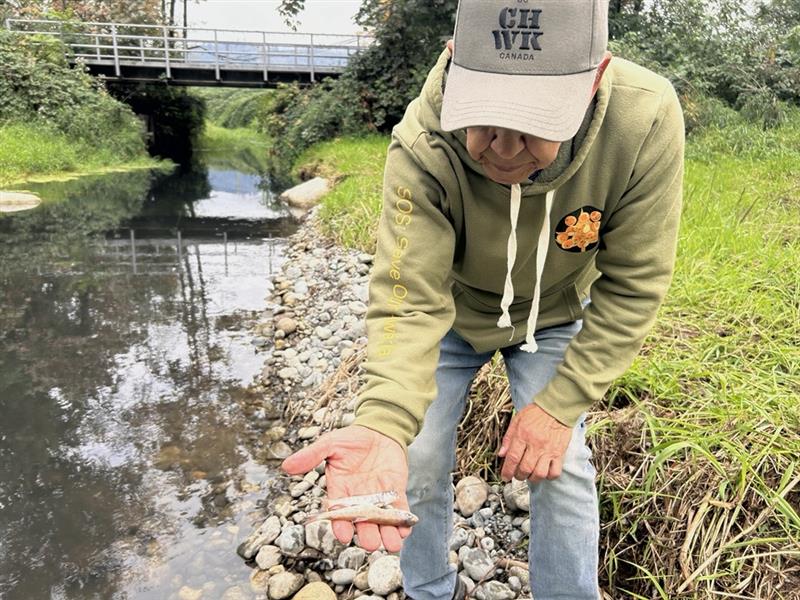
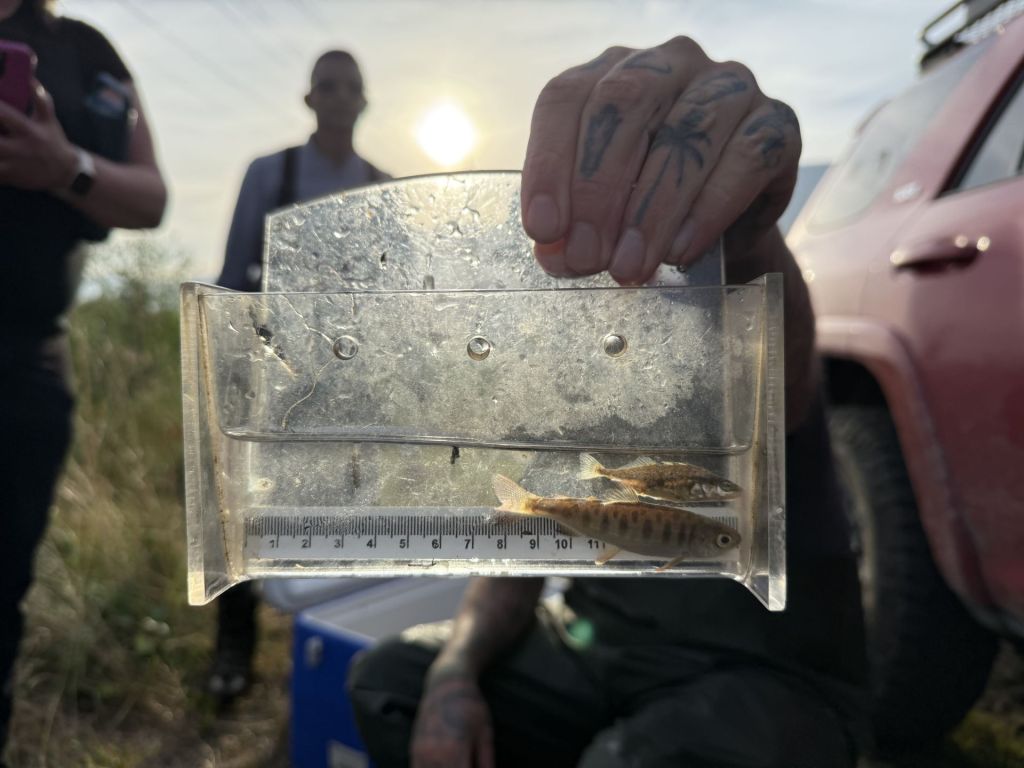
The Hope Slough, or Sqwá:la once a side channel of the Fraser River, is home to Coho, Chum and rare Chinook salmon that return every year to spawn in the slough. It is also an important juvenile salmon rearing habitat. Many other aquatic species call the Hope Slough home, such as Trout and Salish Sucker.
Salmon are culturally important to many Indigenous communities in British Columbia. Salmon holds deep spiritual value for many First Nations. They are keystone species, connecting land, river and ocean, and play an important role in the health of the ecosystems they inhabit. They are an essential in transferring nutrients from marine to terrestrial environments and support a diversity of species including land mammals, marine mammals, birds and forest plants.

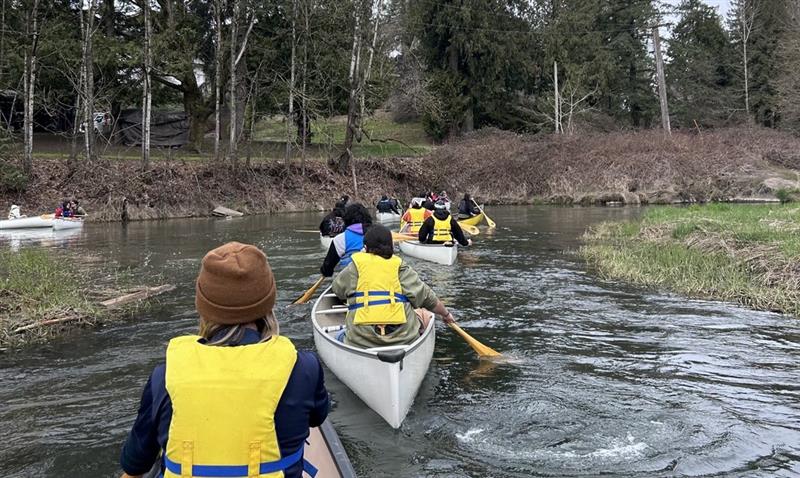
Sqwá:la – the Hope Slough has historically been a place of significant importance for the Xwchíyò:m (Cheam), Sqwá (Skwah) and Shxwha:y (Skway) First Nations. It was a place where children and adults alike would swim in the summer, and people gathered. When the water level rose, people travelled via canoe down the slough, using it as an alternative route for travel.
The top of the slough has been disconnected from the Fraser River due to the construction of roads, a railway, and a dyke in the 1940s, which blocked the slough’s headwaters and reduced its capacity. In addition to physical barriers, a historic accumulation of sediment at its mouth has further impeded flow, degraded fish habitat, and hindered navigation. However, the slough continues to flow out into the Fraser although water from the river does not enter the slough.
What was the issue that this project wanted to address?
Since the 1940s, Hope slough has been cut off from the Fraser river, which led to the degradation of fish spawning and rearing habitat in the slough.
Now, the slough is heavily polluted, full of chemicals from farm and construction runoff and sewer discharge.
In September of 2024, a large spill in a critical area of the slough killed around 7,000 Coho Salmon, amongst other fish. The spill, thought to be caused by an agricultural drainage pipe from a farmer’s land being drained into the slough, depleted all the oxygen from the water, suffocating all the fish in that area. Another spill occurred in early December 2024 during the Coho Salmon run, which also impacted the fish.
Along with pollution, the slough has issues with sediment buildup due to the lack of flow, and lack of a suitable riparian area with hardened banks. In many places, farmer’s fields back directly onto the slough with no riparian buffer.
Several laws exist to protect riparian areas.
The BC government’s Riparian Areas Protection Regulation (RAPR) provides the legal framework for protecting riparian zones and defines specifications for riparian buffers, including those adjacent to agricultural land. It prescribes assessment methodologies and minimum setbacks for development and agricultural activities near watercourses.
The BC Ministry of Agriculture provides specific resources and design guides for establishing riparian buffers on agricultural land , tailored to local conditions and farming practices.
The federal Fisheries Act requires that projects avoid causing serious harm to fish unless authorized by the Minister of Fisheries and Oceans Canada. This applies to work being conducted in or near waterbodies that support fish that are part of or that support a commercial, recreational or Aboriginal fishery .
The Shxwlistexw te Sqwá:la Shxweli: Care for the Life Spirit of the Hope Slough Project, started in 2023 to improve the health of the slough.
What actions were taken to improve the health of the slough?
This project has five pillars of action:
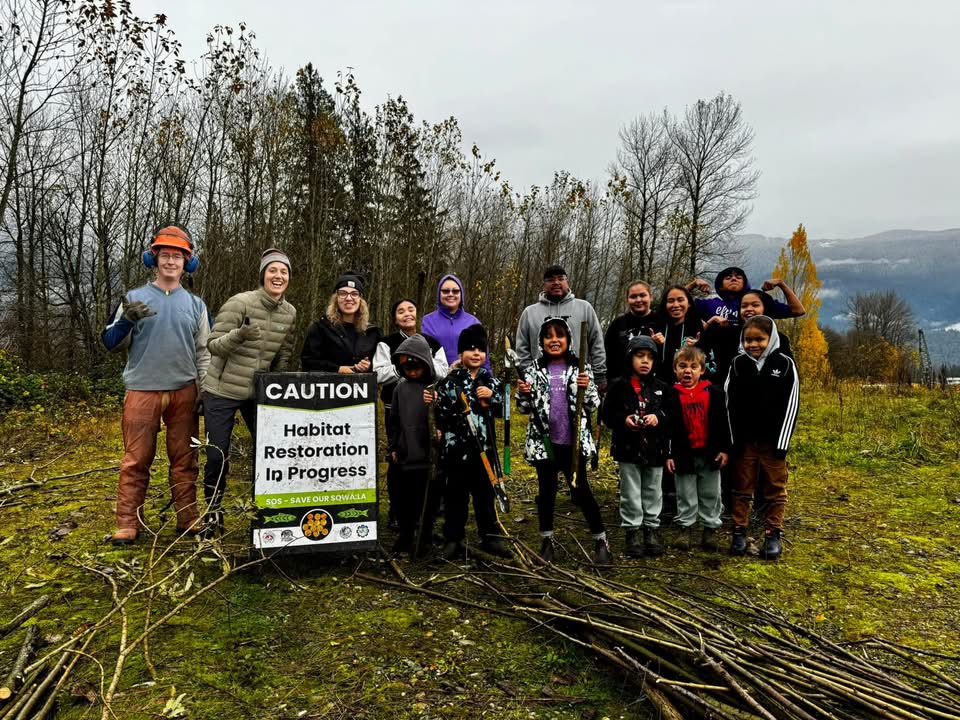
- Community and youth engagement: through school and community programs, as they are the future stewards of the land. The team is working hard to build relationships with fee-simple landowners and farmers. Hope for the Hope Slough information nights are hosted for the community and are heavily attended.
- Improving the flow of the slough: As the slough was once a side channel of the Fraser River, the goal is to clear the large amounts of sediment buildup and restore the flow of the water. The long-term goal is to reconnect the Hope Slough with the Fraser River.
- Improving fish habitat: Salmon need spawning and rearing habitats. This project aims to rebuild and restore the habitat along the slough. This project has so far built five spawning ripples and one juvenile holding pond for salmon.
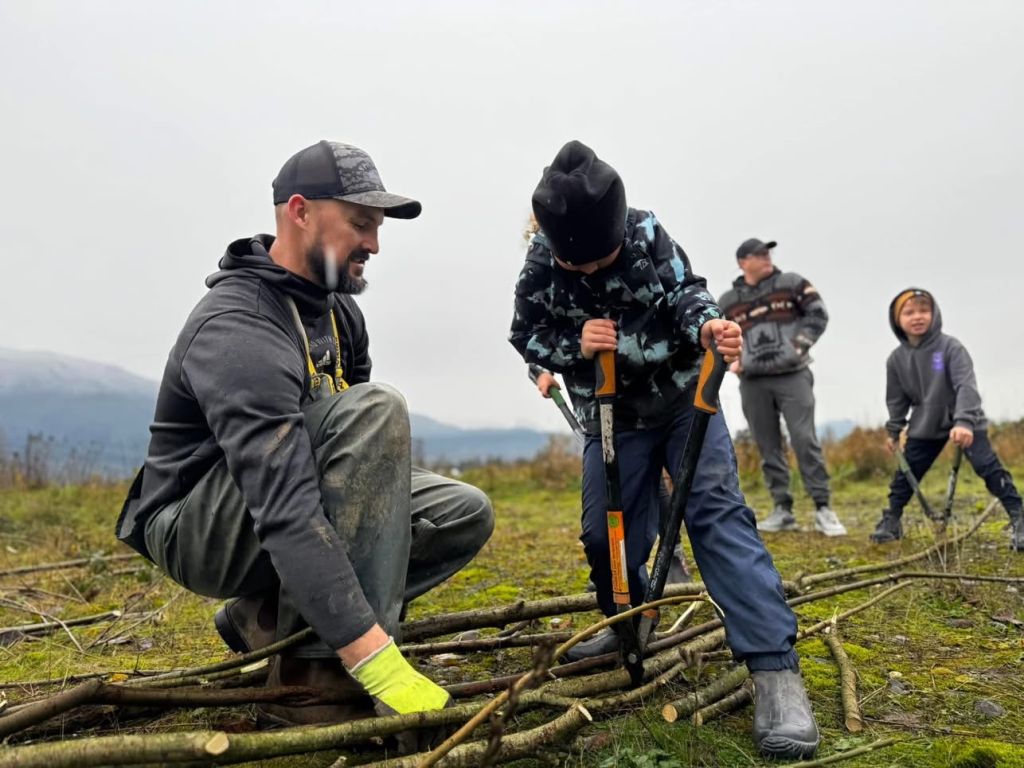
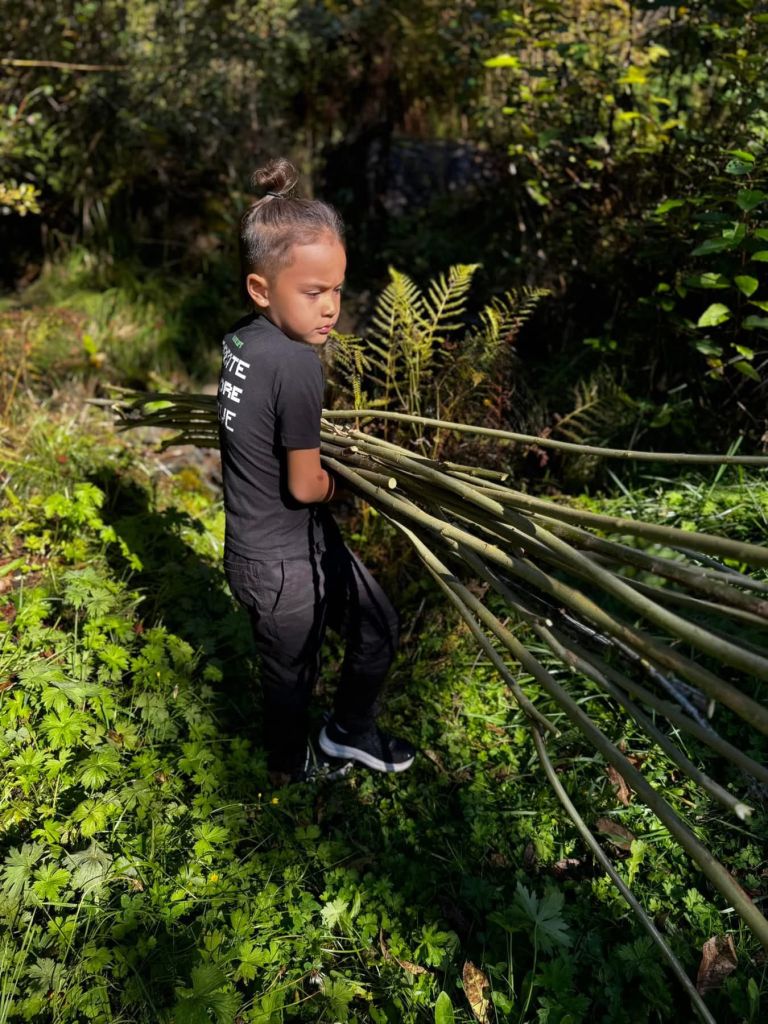
- Riparian planting: The riparian area along the slough has been encroached upon by neighbouring farms. Working together with the farmers, 3.5km of planting has been done along the 30km slough. The riparian planting acts as a buffer between the farms and the slough, provides shade, filters and cleans the water and increases water health. Maintenance of the riparian area that previously existed also took place by removing invasive species. Ideally, this would be done all along the slough where farmland encroaches.
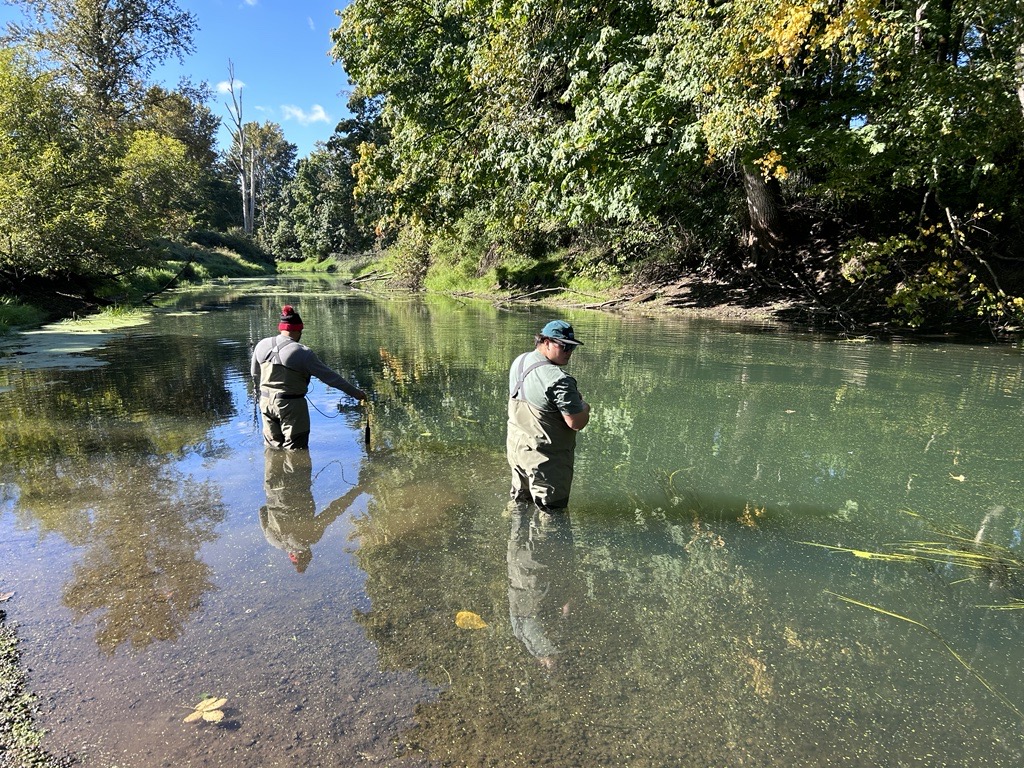
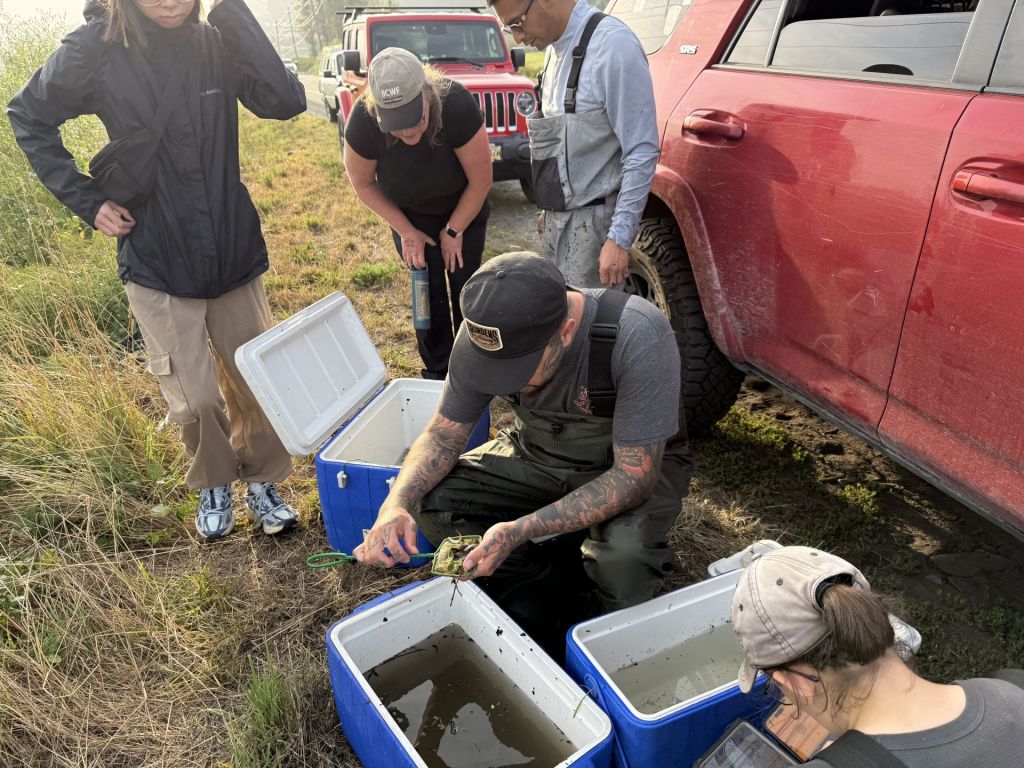
- Water quality monitoring: The team has 36 water quality monitoring sites set up along the slough to track the quality every week. Samples are taken in situ to determine water temperature, conductivity, pH, turbidity, and dissolved oxygen content. They are also tested for chemicals and pesticides. These stations can help them pinpoint the location of spills and work efficiently and effectively to clean them up. They are partnered with Environment Canada to remove a series of waste discharges along the slough.
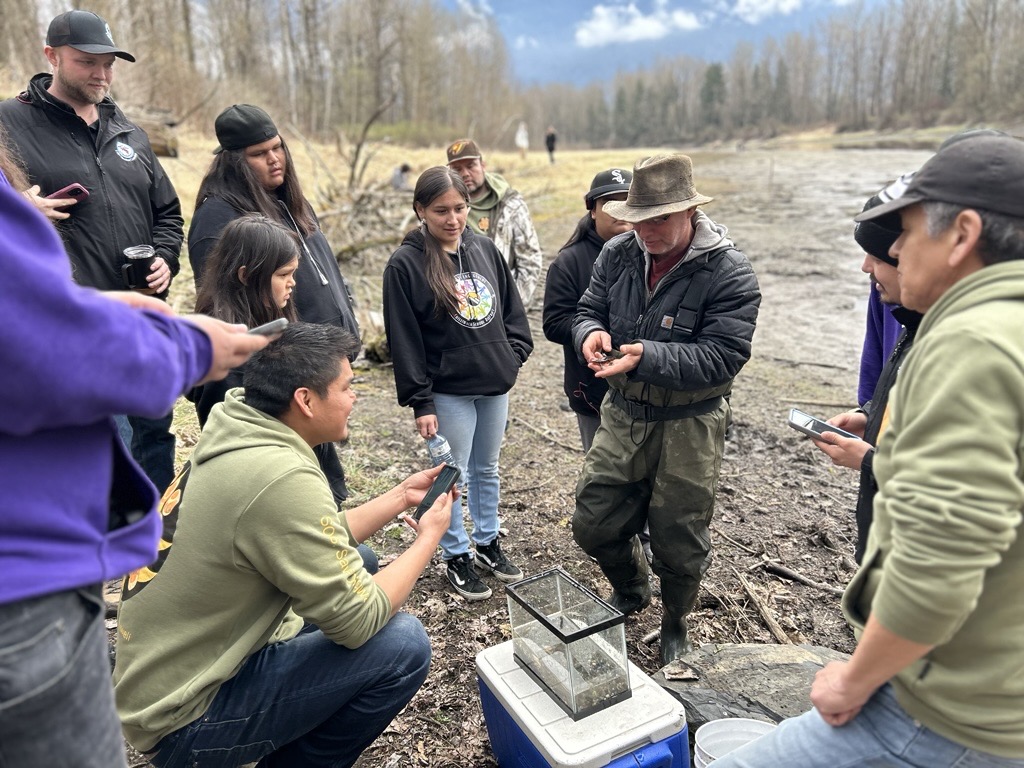
Cheam First Nation hosted many community education events to inspire people about environmental restoration. They hosted over 300 students from local schools through a program developed by the Save our Slough (SOS) volunteer group that involves four stations of hands-on work in the slough. This program is highly sought after by teachers in the area, with the program booking up within the first hour. Students help with riparian planting and learn about the fish. The Cheam First Nation also reaches out to teachers to build connections within the community. They have hosted two spring break camps for Indigenous youth that aim to restore the language and the land. The goal is to inspire youth through science to become a powerhouse for the environment. These camps include sessions for language learning as the language is highly tied to the land.
Has the project been successful in meeting its goals?
So far, incredible work has been done by the team on all of the five pillars of the project.
The efforts made by the team have been incredibly successful in restoring areas of the slough with riparian planting and creating more suitable fish habitat. The team continues to expand the riparian planting to cover more of the slough and maintain water quality monitoring.
The ability to tap into relationships and community connections has been an incredible source of pride for the project. For example, having even one farmer allow riparian planting on their property and seeing the outcomes makes others more open to the idea of similar actions on their properties.
What challenges did the project team face and how did they overcome them?
This project faced its fair share of challenges, from lack of understanding from the local and provincial government to neighbouring landowners having discharge pipes running directly into the slough.
There is a lack of understanding within governmental offices on the importance of the waterway, as it is seen as dirty and unimportant. When they can, the team works to educate government officials and keep them accountable.
The lack of a riparian area is also a major challenge as some farms come right up against the slough. To solve this, Cheam relies heavily on the community connections they have built to encourage farmers to allow them to plant riparian vegetation on the edges of the slough. Although not easy, this has been beneficial.
The final challenge is a lack of capacity. Cheam First Nation is a small team with only one person working full-time on the project. There is little capacity to host volunteers and work on important community engagement.
What is the source of funding?
The money for this project was provided by the Canadian Department of Fisheries and Oceans (DFO).
The funding ran from 2023 to March 2025. It came in the form of compensation money for the Trans Mountain Pipeline Expansion. This project received $ 2.5 million and operated as a grant for aquatic habitat restoration.
Approximately 10% of the budget was spent to improve flow, 20-30% for water quality, 20% for employee wages, 10% for fish habitat restoration and 30% to restoration and riparian planting.
Cheam First Nation has spent $100,000 of its own money to clean up spills within the Hope Slough.
The Cheam First Nation is working to secure more funding to continue this important project.
What is their plan for the future?
The team is actively working to acquire more funding to continue this impactful project into the future. Once funding is secured, the goal is to expand the water quality sampling and monitoring aspect of this project. Working to reconnect the top of the slough to the Fraser River is the ultimate long-term goal. This would require removing the built-up sediment along the channel to clear a pathway for the Fraser to once again flow into the slough.
What can others learn from this project?
This work is very sensitive. It affects around 50% of the farmers in the area and needs their collaboration. Understanding their perspectives and trying to find common ground where both the farmers and the slough can benefit is the end goal. Using connections that you have within the community is a good way of starting off this relationship. Once you get one farmer on your side, it is a lot easier to get more to join in. Having one person say yes to letting the team access their land for work or giving up a small part of their land for riparian planting allows you to show others a place where this has worked in the past and get them on your side as well.
When working with the government, it is important to be persistent and keep reminding them of their responsibilities.