Examples
Eelgrass Restoration Project in Mill Pond, Campbell River
by Greenways Land Trust and The Wei Wai Kum First Nation, written by Amy Melhus
What was the issue that this project wanted to address?
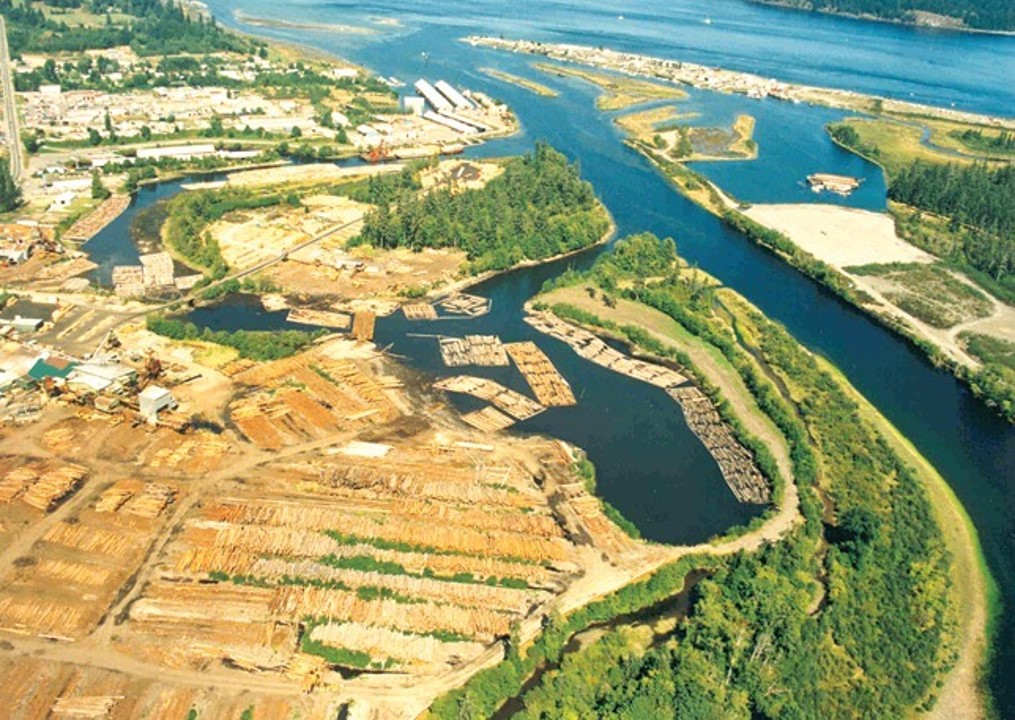
When log storage began at Mill Pond, the depth of the pond increased making it too deep for native marsh plants, such as eelgrass, to grow. The drastic change in elevations reduced the amount of marsh habitat significantly. Invasive species such as Himalayan blackberry and yellow flag iris appeared and outcompeted the native vegetation. With the combination of these two factors, the pond was degraded beyond recognition.
This project aims to bring back the salt marsh benches, and the eelgrass beds and to restore riparian vegetation. These restoration efforts aim to enhance habitat for the native chinook and chum salmon while restoring the ecosystem. The project will build on restoration work done in the area in the early 2000’s and create more space for native vegetation to thrive. Eelgrass is important in many of BC’s coastal ecosystems as it helps to mitigate erosion. It is also a significant juvenile salmonoid habitat where the fish like to stay before heading out to sea.
The goal of this project is to restore 22,000 m2 in the estuary. This includes 5,900 m2 of eelgrass habitat, 12,300 m2 of salt marsh habitat and 3800 m2 of riparian forest habitat.
What were the steps of this project?
The project began in the spring of 2022 with the Wei Wai Kum Guardians and Greenways clearing the project site by removing invasive species.
This was followed up in March 2023 with the building of a bridge for site access which was necessary to be able to carry out future restoration. This was a temporary structure loaned by Mosaic that has since been removed post construction. Removed wood was chipped and soil was striped to remove blackberry roots in April 2023. The stripped soil was used at a later stage of the construction process to infill the marsh.
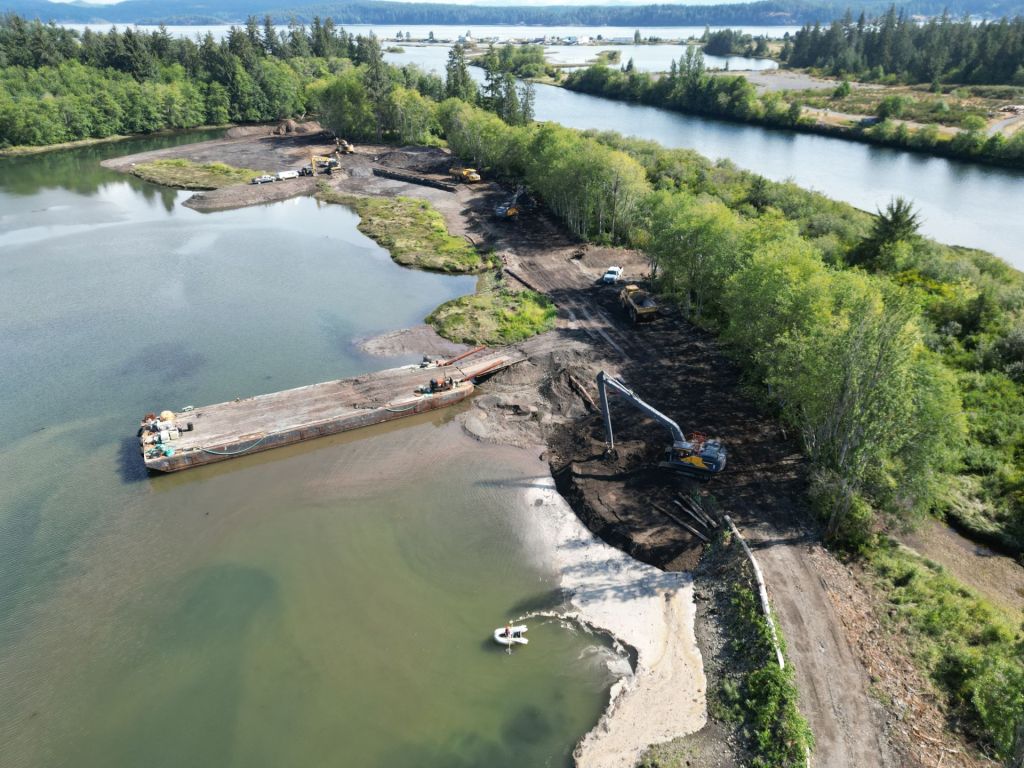
Construction began in 2023 to re-grade the pond to make it a suitable eelgrass habitat. It involved the creation of channels with evacuated soil being used to fill the deeper areas of Mill Pond for eelgrass beds. A barge was used as a floating causeway to fill the deeper areas of the pond using a long stick excavator.
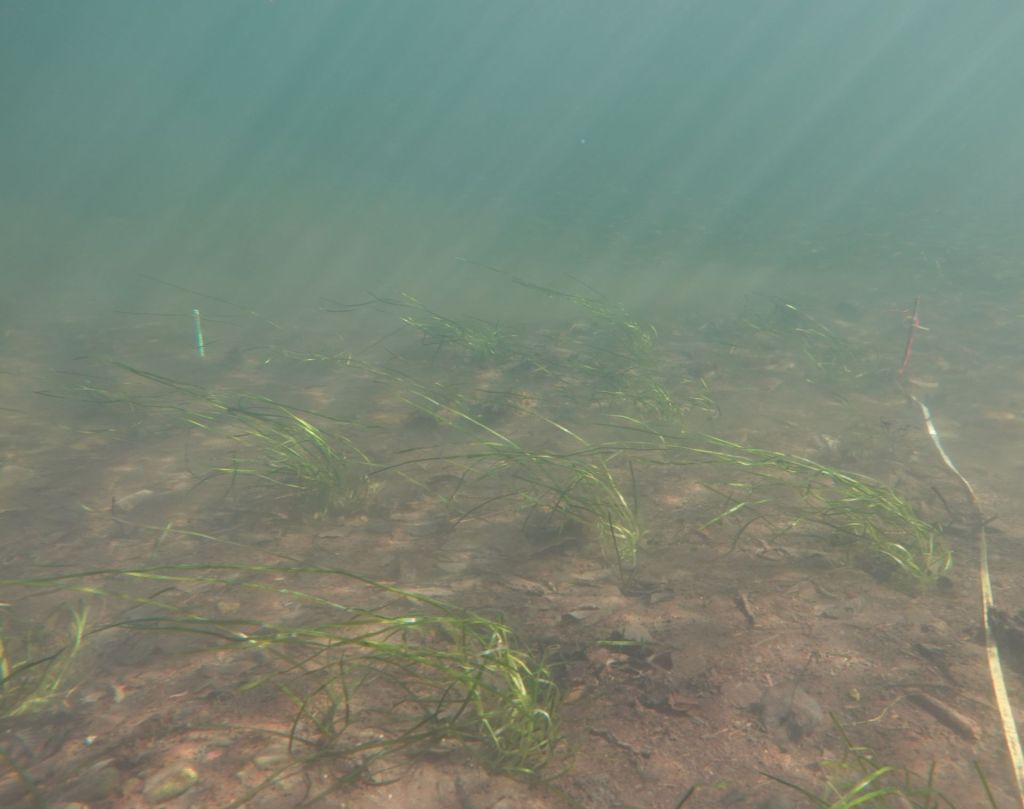
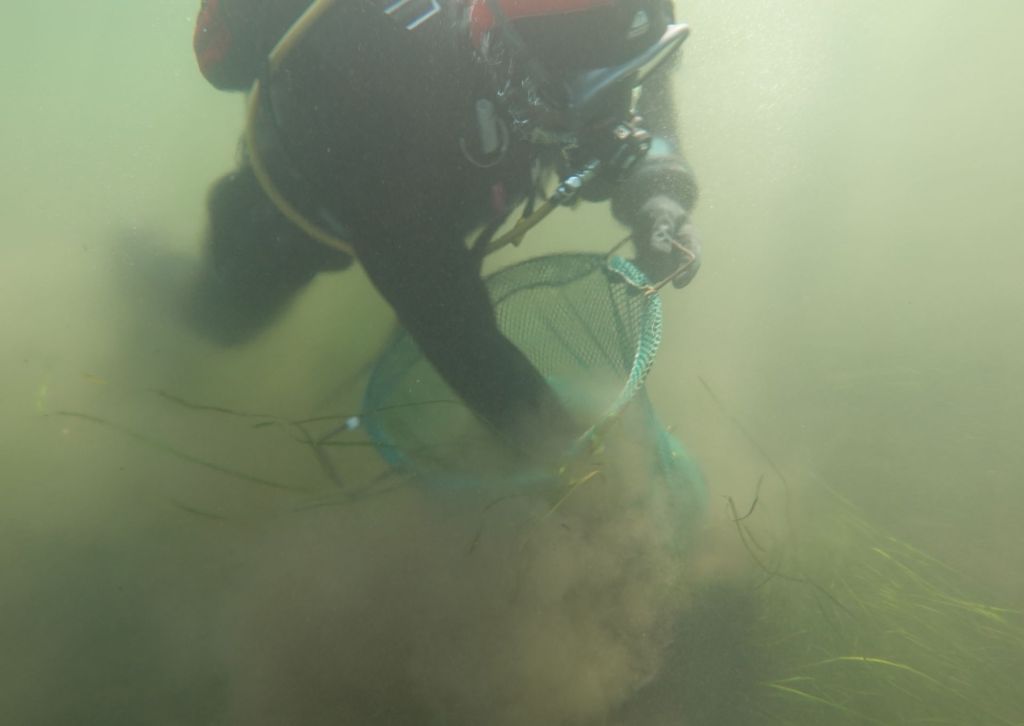
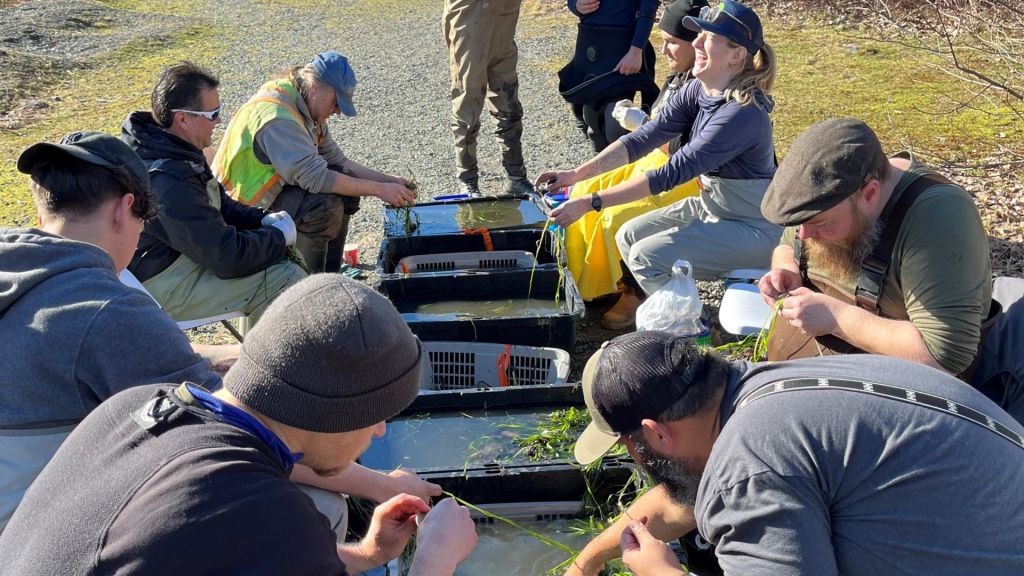
Eelgrass planting began in February 2024 to provide essential habitat for salmon. Eelgrass was sourced from a donor site elsewhere in the estuary and planted by hand. There is one shoot of eelgrass tied to each non-galvanized washer, with ten washers being threaded into a chain that is planted by hand. These washers rust away over time, leaving behind eelgrass rhizomes that at establish on their own.
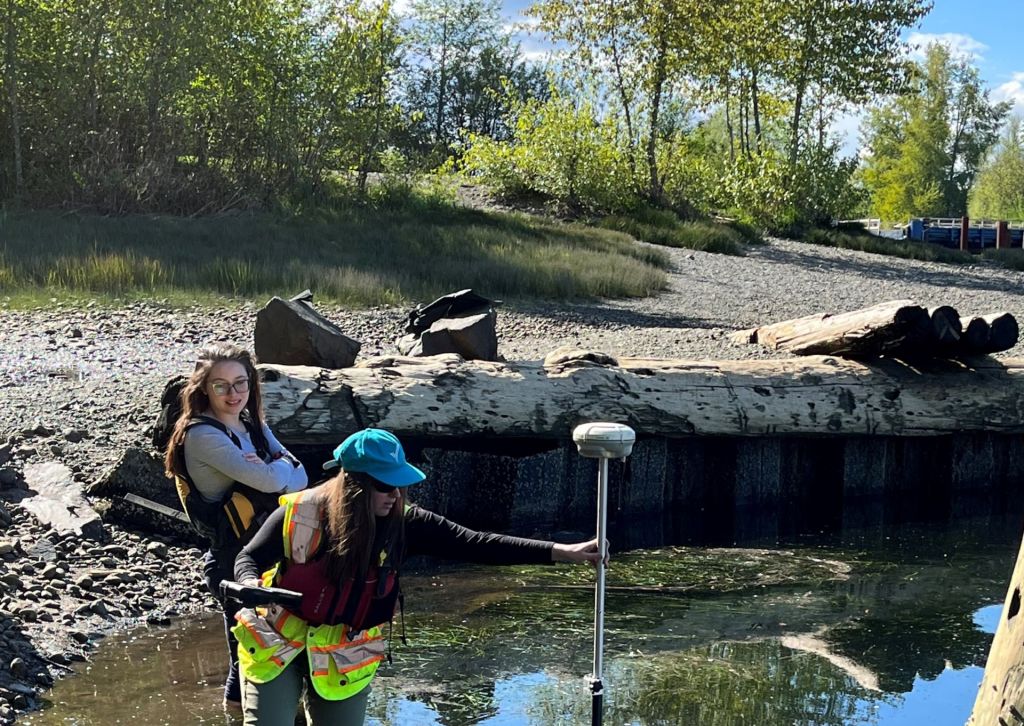
Environmental monitoring took place throughout all stages of the project from pre-construction to post-construction. Effectiveness monitoring is now being carried out in the post-construction stage of the project.
What challenges were faced and how did they overcome them?
Once the salt marsh was replanted, there was an influx of geese to the site which destroyed the planted eelgrass and salt marsh vegetation. In addition, geese droppings can cause serious issues for the chemical balance of waterways. This led to the conclusion that more geese exclusion fencing was needed to keep the animals away from the freshly planted eelgrass and the waterway. Planting has also begun at lower depths to avoid the geese destroying the eelgrass.
When infilling the pond to reduce the depth of the pond, there was a time delay. This was due to the fine-grained material being used for the infill becoming suspended in the water. The team had to spend more time waiting for the material to settle before moving on to the next step of the process than was expected. As material used for infill came from other areas within the project site to keep cost down, the use of imported material was considered. However, after fill analysis through Lewkowich Engineering, it was opted against.
What is the cost of the project? Where did they get funding from?
This is a multi-million-dollar project with many different elements involved. This included building a bridge to make sites accessible, regrading of the pond, planting eelgrass and riparian vegetation, monitoring and stream restoration to ensure flow to the pond remains constant. This project started in 2023 and is projected to end in 2026.
This project was funded by many different groups. Around $1.7 million of funding came from BC Salmon Restoration and Innovation Fund. The Campbell River Salmon Foundation provided $14,000 of funding to the project. $350,000 of funding used for project design was provided through The Government of Canada’s Environmental Damages Fund (EDF), a fund that receives money through payments from environmental violations in the form of penalties and fines. It funds projects in four categories, with this one falling under the Environmental Quality Improvement Category.
What permits were needed for this project?
Has it been successful in meeting its goals ?
The project is not complete, with much work left to be done.
The next steps include planting of more eelgrass, as well as monitoring and invasive species and pest management. However, the eelgrass planting is showing promising signs.
With around 6,000 square meters of eelgrass planted as of April 2025, the project’s main deliverables have been met. Salmon have begun to return to Mill Pond, being spotted enjoying the newly planted eelgrass habitat.