First Nations
Tribal Parks / Indigenous Protected and Conserved Areas (IPCA)
Indigenous Protected and Conserved Areas (IPCA) or Tribal Parks are conservation areas that are owned and governed or co-governed by Indigenous communities, often reflecting Indigenous laws and legal orders. IPCAs are a way of recognizing that Indigenous peoples have successfully governed and conserved the lands and resources in their territories since time immemorial. Guided by Indigenous laws and traditional knowledge, IPCAs are ways to revitalize Indigenous stewardship models and prioritize biodiversity, conservation, and cultural connection.
The Guide and FAQs document shared below have been prepared by IISAAK OLAM.
Indigenous Protected and Conserved Areas (IPCAs) | An Overview – IISAAK OLAM Foundation
Description
IPCAs were recognized in 2017 by the Government of Canada as a means of reaching Canada’s Aichi Targets under the International Convention on Biological Diversity, and endorsed by the 2018 Indigenous Circle of Experts (ICE) in their federal government report, “We Rise Together”. The ICE defined IPCAs as a collective term for lands and waters, including marine areas, where Indigenous governments have the primary role in protecting and conserving ecosystems through Indigenous laws, governance and knowledge systems. IPCAs may be co-designated as national or provincial parks or wildlife areas, but Indigenous Nations are always co-creators, and they are still grounded in Indigenous law.
While IPCAs can take many forms, all generally share three elements:
- They are Indigenous-led.
- They represent a long-term commitment to conservation.
- They elevate Indigenous rights and responsibilities.
Why establish an IPCA?
Creating an IPCA can result in repairing relationships with a Nation’s lands and waters; revitalizing or maintaining culture and language; protecting culturally significant species; or providing an alternative vision for the territories. Other reasons may include increasing the visibility of Indigenous jurisdiction and authority; supporting decision-making; asserting rights and responsibilities in their territories; and protecting threatened cultural keystone species such as salmon, blueberries, or moose.
Establishing an IPCA can generate revenue for a First Nation community through new business opportunities, such as eco-tourism, and carbon related financing.
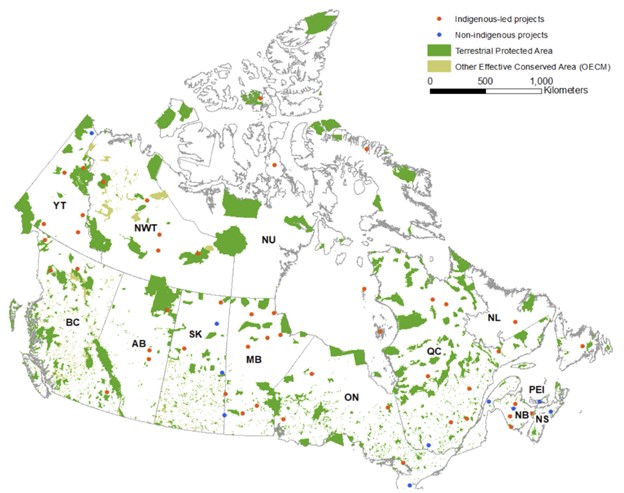
Indigenous-led and non-indigenous conservation projects currently funded under the Guardians Program to meet the Canada Target 1 Challenge (Government of Canada 2021). (Mansuy et al, 2023)
Where can an IPCA be established?
IPCAs can be declared anywhere within the territory of the First Nation government or community considering one. This includes, but is not limited to, shared territories, designated reserve lands, rural areas, cities and towns, and watersheds.
The location and size of IPCAs are determined by the Indigenous Nation and/or governments establishing IPCAs in their territories. They can include lands and waters or a mix of both. IPCAs may also include lands where the provincial or federal government have asserted jurisdiction—for example, crown or public lands and provincial or territorial parks and protected areas, as well as private lands.
There are no known IPCAs in Canadian cities or towns yet, but efforts to create space for Indigenous languages, knowledge systems, and practices are happening, often in collaboration with federal, provincial, territorial, or municipal governments.
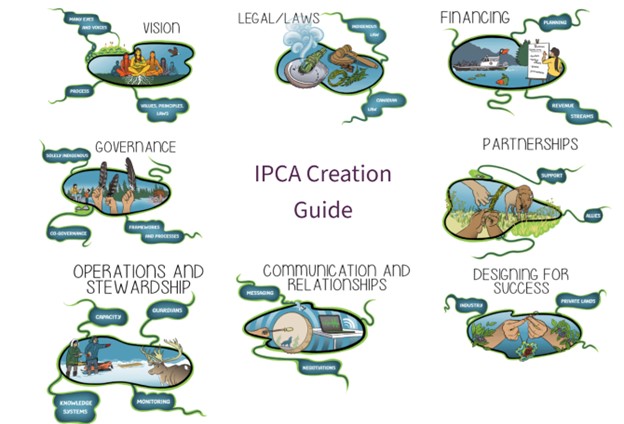
IPCA Creation Guide that can be accessed through the IPCA Knowledge Basket – IPCA Creation Guide – IPCA Knowledge Basket
What are the criteria for an IPCA?
Any Indigenous Nation, community, or government can establish an IPCA following a pathway of their choosing that is based on their own priorities, visions, values, legal frameworks, governance, and knowledge systems for their territories and communities. IPCAs can be established through collaboration among several Indigenous governments and/or with Canadian governments, but it is not necessary for IPCAs to collaborate with any federal or provincial governments either for establishment or management. Similarly, there is no template for what an IPCA should look like, how it should function, how large it should be, or how it will be managed, and there are no specific criteria that must be met for an IPCA designation. However, if a First Nation chooses to pursue legal protection for all or a portion of its IPCA, then some measure of compliance with the criteria of the protection mechanism, such as a national park or a provincial conservancy (see Legal Recognition) will need to be negotiated.
Are IPCAs legally recognized? What are the legal options?
Indigenous Nations, their communities, and/or governments hold the inherent right to designate IPCAs in their territories. They do not require permission, support, or recognition from federal or provincial governments to do so. Indigenous Nations, their communities, and/or governments have the primary role in determining the objectives, boundaries, management plans and governance structures for IPCAs as part of their exercise of self-determination.
Creating an IPCA does not require giving away lands and waters to federal or provincial governments, even when a First Nation chooses to collaborate with those governments. Even in cases where Indigenous Nations choose to co-manage their IPCAs with governments, or choose to have their IPCAs designated as protected areas under Canadian legal systems, they are not required to cede their territories to the government of Canada.
As of 2023, there is no specific legislation for IPCAs under Canadian law, nor has existing protected area legislation been amended to include IPCAs. However, there are several legal pathways for recognizing Indigenous-led conservation and stewardship initiatives under federal and provincial laws. Some First Nations may wish to layer federal or provincial laws in addition to their own laws for additional protections, but this may come with limitations on how the IPCA can or cannot be used.
Options for legal recognition and protection of IPCAs: Conservancies
Because IPCAs are not captured explicitly under federal or provincial laws, they live in a legal grey zone. While First Nations can and do establish IPCAs under their own laws and inherent authority, this does not mean the Crown will recognize the IPCA, and it may not have protection within the Canadian legal system. This may leave IPCAs vulnerable to activities that are not aligned with the objectives of the First Nation or its community, but that are permitted under federal or provincial laws.
In BC, provincial legislation allows for four different types of protected area designations: provincial parks, recreation areas, ecological reserves, and conservancies. Each designation places different constraints on activities and uses. None of these designations allows for Indigenous leadership in managing IPCAs; however, conservancies can be created and protected under the Protected Areas of British Columbia Act for four purposes that align with the intent of IPCAs:
- The protection and maintenance of biodiversity and the natural environment.
- The preservation and maintenance of social, ceremonial, and cultural values of First Nations.
- The protection of recreational values; and
- The sustainable development of natural resources.
Two examples of such conservancies are the Kitasoo Spirit Bear Conservancy, managed by Kitasoo/Xai’Xais Nation, and the Hakai Lúxvbálís Conservancy, managed by Heiltsuk Nation.
Options for legal recognition and protection of IPCAs: DRIPA
Opportunities for establishing and managing IPCAs in BC could be enhanced by the provincial Declaration on the Rights of Indigenous Peoples Act (DRIPA), passed in 2019. Overall, DRIPA requires the province to work with Indigenous Peoples to ensure that the laws of BC are consistent with the United Nations Declaration on the Rights of Indigenous Peoples (UNDRIP). This means that BC’s laws must align with the sections in UNDRIP that support the creation and management of IPCAs. DRIPA also allows government officials to negotiate and enter into agreements with Indigenous governing bodies. The agreements can offer joint decision-making powers under provincial law or require that consent from Indigenous Peoples is gained prior to provincial land-use decisions. This could allow First Nations to negotiate with the province to collaboratively manage IPCAs with Indigenous authority.
What do partnership models look like?
In cases where a First Nation prefers to collaborate with federal or provincial governments or other partners, they may consider adopting one of a variety of shared decision-making, joint management, or advisory mechanisms. These might be defined by constitutional agreements or other constructive arrangements between the parties. Such arrangements can also facilitate establishing other types of protected areas. Most partnership models take one of the following forms:
- Indigenous government/Crown government partnerships (including federal, provincial, territorial, or local), which emphasize cooperation and developing agreement to recognize, establish and/or manage a protected area – see Great Bear Rainforest case study example;
- Indigenous government/non-governmental partnerships, which may include industry, land trusts or conservation organizations, and are often conducive to the acquisition of private properties for conservation purposes;
- Hybrid partnerships, which include multiple parties (both government and non-government) that work collaboratively to resource and manage protected or conserved areas through a collaborative agreement where all roles are clear – see SC’IA⁄NEW Tribal Park case study example; or
- Sole Indigenous governance, where land management decisions and actions for protection or conservation purposes are made unilaterally by the First Nation about Treaty lands, reserves, Aboriginal title, etc.

The IISAAK OLAM Foundation shares knowledge and builds capacity for Indigenous Protected and Conserved Areas (IPCAs). The IISAAK OLAM Foundation purpose is to support the establishment and long-term capacity of IPCAs and to educate Canadians about their value and relevance. IISAAK OLAM has developed training courses and resources to support Indigenous Peoples develop IPCAs including a tool called the Knowledge Basket.
Nature for Justice is an organization that helps Nations assess the potential of their IPCA for nature-based solutions and carbon financing. The also help create just partnerships for catalytic and sustainable financing for IPCAs. Audience: Indigenous Nations and Communities in Canada interested in exploring the role of NbS and carbon to finance long-term management or expansion of IPCAs (early ideation stage).
Story Maps
In addition to the case studies highlighted below, a report by the David Suzuki Foundation, “Tribal Parks and Indigenous Protected and Conserved Areas: Lessons learned from B.C. examples” (Plotkin 2018) summarizes the experiences of several First Nations that have established Tribal Parks or IPCAs.
QEN’,T Marine Protected Area
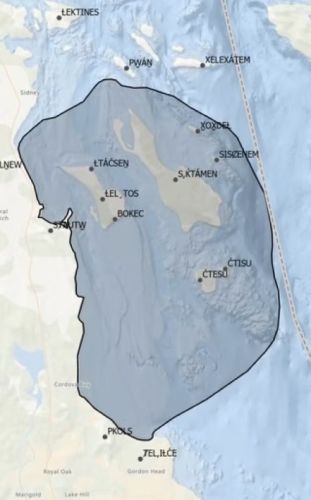
In June 2023, Tsawout First Nation, located 20 km north of Victoria, declared an IPCA for 155 km of ocean in its traditional waters. Tsawout is working to monitor, restore, and protect their waters to revitalize culture, prevent further infringement on the Nation’s rights to fish, and provide sustainable and resilient fisheries for future generations.
Gwaxdlala/Nalaxdlala Great Bear IPCA
After more than two years of gathering information, developing its own management plans, and securing support from the community, on November 29, 2021, the Mamalilikulla First Nation (MFN) declared the Gwaxdlala/Nalaxdlala (Lull Bay/Hoeya Sound) area of Knight Inlet an IPCA. The Mamalilikulla’s goals for its IPCA are a collaborative governance approach to:
- Protect, restore, and maintain unique habitat and culturally significant species;
- Protect, restore, and maintain MFN cultural connection to the land, sea, and sky;
- Provide ecosystem management-based economic opportunities for community benefit;
- Protect and maintain MFN food security;
- Protect important archaeological and cultural sites; and
- Incorporate integrated, holistic approaches in IPCA planning and management.
The 10,416-hectare IPCA includes land and marine components: the land portion contains three watersheds that are currently managed under the Great Bear Rainforest Land Use Order and carbon project (see Section 6.7.4 for more information), and the 2,123 ha marine area is proposed as a new site in the draft network of Marine Protected Areas in the Northern Shelf Bioregion.
The journey to reach the IPCA Declaration was a long and highly complex one that involved countless hours of community member meetings, compiling background documents, commissioning new studies, and developing marine and watershed management plans for the area.
SC’IA⁄NEW proposed Tribal Park
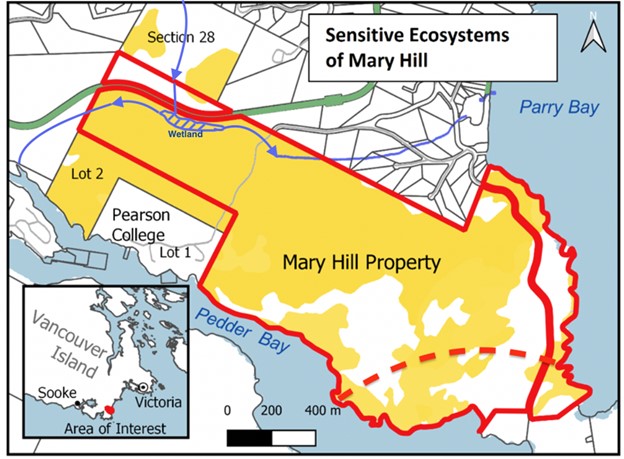
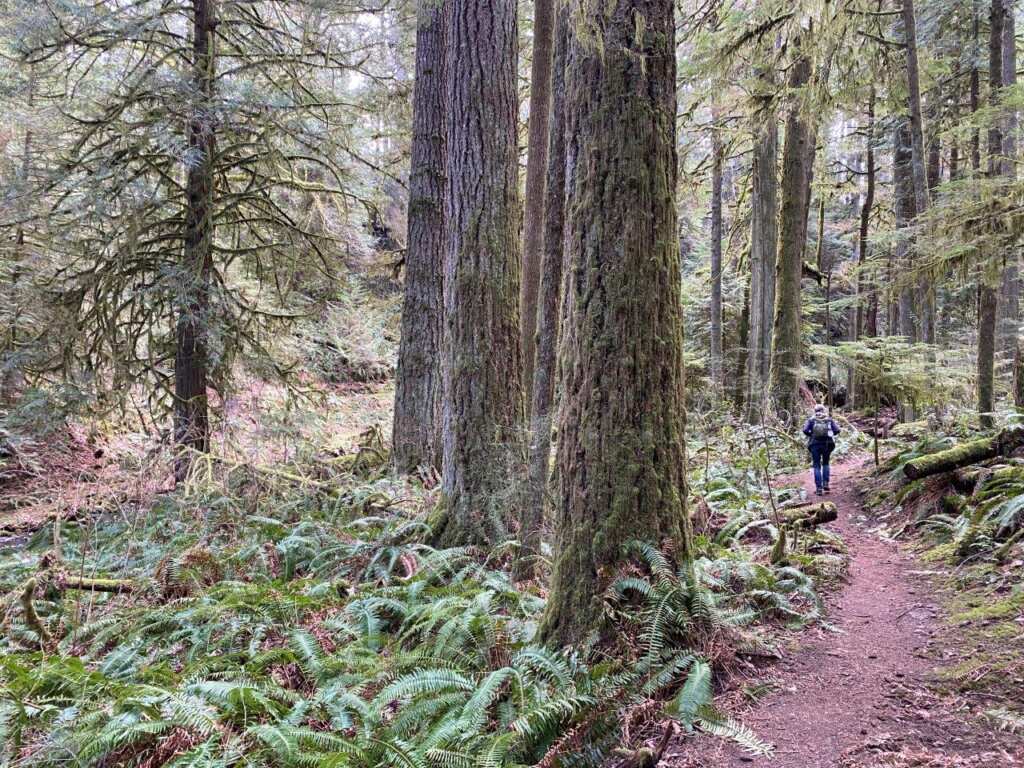
The proposed SC’IA⁄NEW Tribal Park is on southeast Vancouver Island, in the District of Metchosin. Currently known as Mary Hill, this 176-ha parcel is part of SC’IA⁄NEW (Beecher Bay) First Nation’s ancestral lands. There is ample evidence of pre-contact Coast Salish occupation throughout the area, with at least 33 archaeological sites recognized under the Heritage Conservation Act. The land contains old growth coastal Douglas-fir, arbutus, and Garry oak and associated ecosystems, providing habitat for at least 18 rare species, including 11 that are listed under Canada’s Species at Risk Act, and four ecological communities that are critically imperiled.
History
In the early 1900’s, Canada’s Department of National Defence (DND) acquired the Mary Hill lands, interrupting SC’IA⁄NEW’s use and occupation. Under DND’s management, Mary Hill has been closed to public access and sheltered from non-military development, being used since the 1940s as a key military training site. In 2018, DND declared Mary Hill surplus to its needs.
Negotiation and Agreement
Under the BC Treaty Process, SC’IA⁄NEW First Nation is negotiating with Canada to acquire Mary Hill as Treaty Settlement Lands. SC’IA⁄NEW initially considered conventional development opportunities, such as housing and logging, but a business case for a Tribal Park featuring conservation-compatible ventures showed that potential for economic benefit to the community was equal to that of conventional development. SC’IA⁄NEW First Nation agreed to consider forgoing conventional development to create a Tribal Park, provided the community’s overarching social and economic interests and priorities can be sustained. Bringing people back home, through renewing guardianship, stewardship, and cultural practices in the area, as well as ensuring benefits to the community are central to SC’IA⁄NEW’s vision for the Mary Hill lands.
In 2022, SC’IA⁄NEW led and signed a Standstill Agreement with project supporters District of Metchosin, Habitat Acquisition Trust (HAT), and Pearson College (an adjacent land owner), in collaboration with the Te’mexw Treaty Association, to allow time to explore different ways to protect the Mary Hill lands in perpetuity. A land use analysis and ecological survey were completed, along with several engagement processes. In October 2024, after more than 18 months of engagement, the SC’IA⁄NEW community voted 81% in favour of a Tribal Park, the term preferred by the community rather than IPCA.
Way Forward
While treaty negotiations are still underway, the lands remain under DND jurisdiction. The Tribal Park work now involves developing financing and implementation processes. Using lessons learned from other First Nations (Thaidene Nëné IPCA by Łutsël K’e Dene First Nation, Great Bear Rainforest by COAST, Tla-o-qui-aht Tribal Park at Mears Island via IISAAK OLAM), SC’IA⁄NEW worked with HAT to develop a four-phase process:
- Transition phase: establish a Steering Committee comprising Chief and Council, HAT, legal representation, and others.
- Design phase: researching, designing and developing supporting frameworks to meet community vision and goals for a tribal park.
- Implementation phase: establish economic ventures, a Guardian program, etc.
- Monitoring phase to inform adaptive management.
An endowment fund is being set up to offset development costs associated with the Tribal Park and probable economic benefits had the site been developed conventionally. A second fund will support economic ventures and the business development. A third fund will be established for operations and maintenance costs, such as the Guardian program.
SC’IA⁄NEW have explored carbon credits for funding potential. A formal assessment found the forested lands of SC’IA⁄NEW Tribal Park would meet the criteria for carbon crediting under an aggregate model; however, discussions with potential carbon credit partners have been put on hold until further consultation with community and project supporters.